Showing posts with label content. Show all posts

Tuesday, April 21, 2026

Where is Agentic AI Headed?

Agentic AI is gathering steam and is getting headlines now. While AI Agents aren’t as frightening as Artificial General Intelligence, swarming Agents can get scary if not guided by clear, focused, and beneficial goals bounded by guardrails. Hopefully, humankind will be taken into account when setting these goals and guardrails. Keep in mind that previously siloed types of AI will be swept into these two powerful categories. See the types of contributing AI by clicking here. Let’s dive into the future of Agentic AI, but first, let’s get some definitions down for clarity. I let AI, (*MS Copilot 365,) itself create the two definitions below:


     Agentic AI is like schools of fish looking for feeding grounds

Definition of Agentic AI *

Agentic AI refers to artificial intelligence systems that possess the ability to act autonomously and make decisions based on their own goals, preferences, or objectives. Unlike traditional AI, which typically follows predefined rules or responds directly to user input, agentic AI can initiate actions, adapt its behavior, and pursue complex tasks without constant human oversight. This type of AI often features advanced reasoning, planning, and self-motivation, making it capable of interacting with environments in a proactive and dynamic manner.

Definition of Artificial General Intelligence (AGI) *

Artificial General Intelligence (AGI) represents a type of AI that is capable of understanding, learning, and performing any intellectual task that a human being can. Unlike narrow AI, which specializes in specific applications, AGI demonstrates flexibility and adaptability across a broad spectrum of activities. AGI systems are designed to reason, solve problems, and transfer knowledge between different domains, closely mirroring the general cognitive abilities of humans.

Difference between Agentic AI and AGI

Agentic AI is usually autonomous and makes decisions based on defined or self-defined goals within a narrow band of specific problems. AGI can understand, learn, and apply knowledge in a wider range of contexts, leveraging broad cognitive capabilities like humans can. There is, however, a growth path for Agentic AI to learn and broaden its goal and context domains. Then the differences start to blur and overlap, creating some muddy opportunities and situations. This writing assumes that this growth path is where Agentic AI is headed


          Real Agentic AI Attained: How Will You Know?


Ultimately, Agentic AI will reach the pinnacle of seven dimensions that I will describe below. View this as an arch of attributes reaching over us as we pass through underneath, with the keystone dimension being independence. All these dimensions are growing in maturity and capability with Agentic AI, simultaneously yielding real Agentic AI.

Significance

This dimension represents the guiding goals for Agentic AI as it pursues results within solid boundaries and good governance. This may mean that the goals can blend and bend on context with emergence. Eventually, goals will be adapted dynamically.
 
Context of Interest

The goals, static or emerging, will point to context(s) and supporting data/knowledge of interests driven internally or externally. These contextual domains will contain resources for agentic AI to leverage and potentially update, affecting other agents, building patterns of repeatability.

Detection

Agents will need to be sensitive to change, even if looking for expected events or triggers. Planning agents will also look for patterns of interest and match them to pre-established or dynamic strategic planning analysis results, looking for opportunities to make change. If emergence is detected, these agents will report and represent the patterns of conditions, thus potentially shifting outcomes.

Independence

Agents will be given more and more freedom to respond to changes detected while operating in real-time. This is where the lines between AGI and AI agents will blur. They may cooperate with each other or override each other based on situations anticipated or not. Full freedom will be where there are significant learnings to be had. This is a real step of faith as process control fades.

Continuous

Agents will be in an always-on mode in a real-time fashion and cycling through an iterative improvement cycle based on instant optimization within guidelines, boundaries, and blended goals, looking for adaptation opportunities or threats.

Collaboration


Agentic AI will not only leverage legacy-wrapped processes, snippets, code, bots, and purpose-built agents, but also collaborate with agents that are specialized, physically embedded, or highly interdependent. A brokering or management agent may interact with other agents depending on goal compatibility.

Swarm Dynamics


AI agents will not only cooperate but swarm to create dynamic success patterns of operations, adapting to emergent conditions to stay within significant goal priorities. This will dynamically change the shape of agent executions to match any emergence detected.

Net; Net:

Are we there yet? Well, we have and will continue to see Agentic AI operating on the battlefield. While this is not my favorite topic, there are also successes in IOT device behavior and supply chain situations. General business applications are early because business is busy with chatbots, automation, algorithmic optimization, LLMs, and agent interactions with processes. Expect a change from inside-out change agents/bots being controlled by processes to real outside-in Agentic AI over the coming years. From process-driven to goal-driven with guidelines and guardrails. You don’t have to wait for quantum computing, but a big boost is coming from quantum.

Additional Reading:

Guiding Agentic AI with Goals

Goal Lifecycle

Goal Management

Attaining Stretch Goals

Agentic AI in Context

Context Savvy

Data Context

Big Data 

Agentic AI Detects


Business FOMO

Event Discovery

Dark Patterns

Agentic Independence

Agentic AI and Processes

Coordinated Autonomy

Agentic AI Management

Agents Making Decisions

Decisions Without Perfect Data

Agentic AI is Always on

Real-time Scenarios

Corporate Performance

Real Time is Essential

Collaboration with Agentic AI

Clearing Chaos

Results Coordinate Agents

Agents Represent Stakeholder Interests

Agentic AI Swarms

Agents Built to Swarm

Best Agents to Swarm

Swarming to Serve Customers


Monday, February 16, 2026

AI is Better Than Me; Now What?

We all know that AI is progressing fast in a linear fashion so far, but there is an inflection point coming. In early 2026, AI’s IQ is now higher than 98% of the population, hovering near 130 and growing about 2.5 points per month in a linear fashion. The reaction might be “OMG What am I going to do?” 


First, you might question whether IQ is the right measurement because IQ is for humans, and AI might find IQ answers in large data sets that it can power through instantaneously.  That only delays action and is kind of a “head in the sand” approach for AI. Second, you might take a number of proactive approaches to dealing with AI. Whatever you do, keep in mind that AI struggles with the following (for now)

·        Common sense

·        Contextual understanding

·        Explainability and transparency

·        Ethics and judgements

·        Emotional intelligence (EQ)

·        Empathy

·        Creativity and Original Innovation


Proactive Approaches to Buy Time


Super Charge Yourself with AI

Use AI as an assistant as it is powerful, fast, and cheap for automation tasks and integrating some answers for further human processing. AI is great at data analysis and pattern recognition, which can be leveraged for better situational analysis. AI is also getting great at generating images, videos, and even self-healing software.

Shift Your Differentiation to Soft Skills

If you see AI painting you into a corner as your organization keeps aggressively leveraging AI to stay competitive, make sure you pick skills and volunteer to handle roles that are more reasoning-focused and judgmental.

Shift Your Career from Knowledge Work to Physical Skills

Long-term AI will try to eat up most of the knowledge work. There are predictions that most knowledge work will be rare in a five-year horizon, so physical infrastructure jobs will be in demand until robotics catches up

Net; Net:

Organizations will need AI to stay competitive in changing markets, so they will not likely take care of their employees. Everyone will be on their own to cope with AI’s impacts even before it reaches the singularity. While AI still struggles with 100% factual accuracy and common sense, it’s just a matter of time before it reaches excellent accuracy. You can ignore AI at your own peril, as every knowledge job is on a countdown to be reduced or eliminated in the next five years, and physical work displacement another five years. Will unemployment approach 90+ percent in your lifetime? Time will tell.

Additional Reading:


Wednesday, October 22, 2025

AI Helps Introduce My Music to Peeps

As a creative, I enjoy writing songs and creating art.  As a music producer, songwriter, and vocalist, I found myself with a catalog of songs our team created with an audience of friends, family, and business associates. Well, this is fine, but I wanted to reach out and promote the stories in my songs as I start with the story and lyrics. My team and I then craft music to match and/or alter the lyrics. While streaming helps a bit, you have to actively market your songs because every day, thousands of songs are created by folks today, and tomorrow, AI will add to the mix. So, how can I encourage my audience to grow? Well, AI now plays a role. 


AI to the Rescue

My co-producer and genius partner, Ethan Foxx was using AI videos to promote his songs. So Ethan taught me how to create AI videos synchronized with the songs we both produced. I went on my own after a couple of collaborative videos Ethan and I created. I learned how to script for Kaiber AI and create my own AI music videos. It's been a blast waiting overnight for AI to render a video, and now I see the results. It usually takes me two or three times before I get a Video I like. I figured the best way to expand my audience was to post the videos on YouTube and TikTok, targeting a younger demographic. Well,  the results have been pretty impressive, as you can see above in the image from TikTok. Over 11K likes and over 200K views. You can find me on TikTok, or click here for YouTube access. The most popular videos are "Forgive" and "Dark Star Love". The best video is "Cry for Creation"


Monday, October 20, 2025

What Did Folks Read in the 3Q 2025?

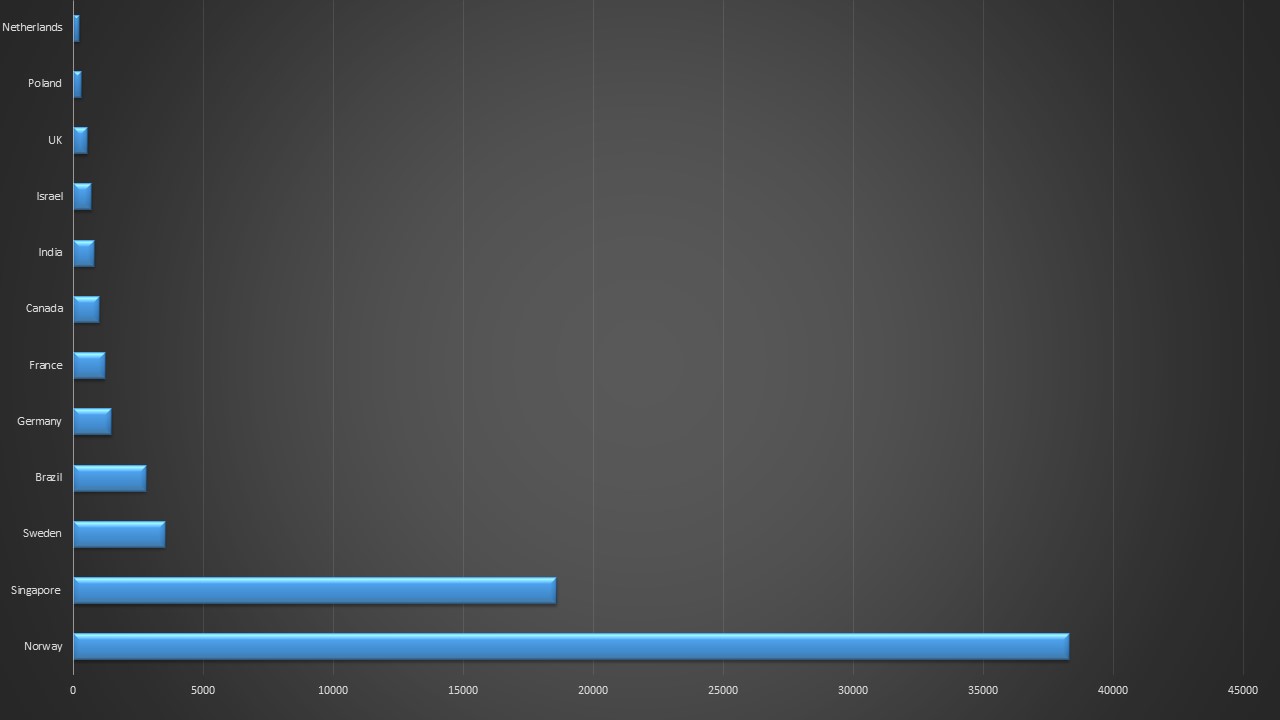
 There was a definite shift in topics from a myopic AI driven interest to a more balanced approach as we are in an AI bubble about to burst for the AI vendor sector. There will be vender consolidation and more pragmatic approcah to applying AI to customer experiences and business processes in most industtries. This leaves exotic agentic AI for specific insutries that have distributed infrastructure that can act on it's own behalf. Below is a chart indicating hot topics for the 3Q 2025 and the countries other than the US, China and Russia that are active on my blog. It was an active quarter for reading my blog.

                                                        Hot Topics for the 3rd Quarter 2025


                                               Country Activity for My Blog 


Tuesday, September 30, 2025

Up For a Grammy: Wohoo

 Good news for my team and me. We are officially balloted for the 68th Grammys. It's a key step, but now we need nominations. If you know anyone who is a Grammy voter, please consider recommending us. Wish us luck 

Click here for the Tune

Click here for the Video


Wednesday, April 23, 2025

Preorder Practical Business Process Modeling and Analysis:

This book should be handy for those who want to master digital change with incremental business process management modeled for AI transformation. All authors have significant real-world experience and are thought leaders in digital processes and customer experiences. Click here to preorder 


Book Description

Every business transformation begins with a question: How can we do this better? Whether it’s eliminating inefficiencies, optimizing business operations, automating repetitive tasks, or reimagining entire workflows with the help of AI, success depends on understanding and optimizing business processes. However, with shifting market demands and evolving technologies, finding the right approach can be challenging.

This book dives into business process modelling, guiding you through frameworks, techniques, and tools that drive digital transformation. You'll learn to visualize complex workflows, establish scalable process architectures, and integrate automation for efficiency. With insights into BPMN and business value analysis, you'll discover how data-driven decisions can lead to smarter, more agile operations. Through real-world examples, you’ll see how leading organizations have optimized their processes and how you can apply the same principles while embarking on a digital change program.

By the end of this book, you’ll be able to design, analyze, and refine business processes for measurable impact. You'll master the synergy of technology, process, and strategy to build adaptable systems that drive sustainable growth in digital transformation.

What you will learn: 

Build scalable process architectures for long-term efficiency and adaptability.
Avoid common pitfalls in digital transformation and automation.
Apply real-world strategies and frameworks to optimize operations effectively.
Discover methods and tools to enhance business process analysis and decision-making.
Learn how BPMN can be extended for scenarios like process simulation and risk management.
Measure and maximize business value from process transformation efforts.

Who this book is for

Whether you're a business analyst, project manager, consultant, or strategist, you likely face challenges in streamlining workflows, optimizing processes, or integrating AI and automation. This book provides the tools, techniques, and frameworks to visualize, analyze, and improve business operations. Some familiarity with business processes and technology is helpful, but no prior expertise in BPMN or automation is required.

Tuesday, April 15, 2025

Art of the 1st Quarter 2025

 With a new song coming out in January 2025, my art focused on an image that projects the theme of the song and an AI-generated music video. Dark Star Love is about an exciting and scary chance meeting with a kindred soul. Will it last or will they move on? It's like plunging into a black hole of sorts. Click on this link for the full video 


Wednesday, January 29, 2025

Top 5 Predictions for 2025


1. Change will dominate


Change is accelerating, and the environments in which businesses and individuals participate are changing. Complications and emergent complexity will increase, thus pushing situational analysis to the fore. While more information sources on trends and potential change are available, few businesses are taking advantage of dealing with change proactively. Those who make situational analysis a proficiency will make dealing with change a key to thriving in 2025 and beyond.

Read About Change:

Situational Analysis

Situation Analysis with SWOTS

Big Change and Peeps

2. Lack of Speed Kills

Organizations and individuals that can't keep up will be in for uncomfortable days ahead. Not only will proactivity be necessary, but the ability to adapt with the proper speed will become a cherished proficiency. Organizations need to see where they are in real-time and make decisions that follow expected and unexpected situations at all levels. Quickly taking the right actions is the most crucial ability for organizations and individuals. Bombardments from bad actors and impure data/information will complicate it.


Read About Speed:

Real-Time Awareness

Decisions, Decisions

On Point Actions


3. AI will be a Force Multiplier

Many facets of AI will gain momentum in 2025. AI will be essential to deliver productivity gains necessary to move the needle for GDP growth while reducing the hours worked for organizations and individuals. AI will unlock and multiply human potential in new and better ways. AI will be embedded in more and more interactions, processes, and applications in 2025. AI will act as agents to complete tasks for humans, enhance skills as humans complete their assignments, and give knowledge and advice in various domains and roles that humans participate in. It makes no difference if you are a consumer, employee, investor, or creator; AI will be there in emerging ways in 2025. Ethics will be tested in 2025 as some use AI in unexpected ways.

Read About AI Actions

AI for Good!

Fear of AI is Overcome

AI is Productive


4. Many Facets of AI

Many, but not all, facets of AI will make significant progress in 2025. Typically, flashy forms of AI catch the eye of the news and markets. In 2024, it was Generative AI, and in 2025, so far, it's Agentic AI. While markets tend to follow the flash, with AI, it's more than the flash. Past forms of AI will continue to build multiple baselines while the "AI du jour" will cast its temporary spells. AI will likely be used in combination with other digital technologies to find soft spots for increased productivity. It won’t be just automation; it will be assistance as well in 2025, leading to augmentation by AI and teamwork with AI.

Read About AI Types

Types of AI

AI More in Control

Automation & Assistance


5 Govern Now or Pay Later

While we all wait for governance and legal frameworks from the strategic and governmental levels, we need to do our job by setting proper goals and boundaries for AI. As AI emerges, setting up good goals and boundaries will be essential, along with auditing outcomes. Governance will lag until something bad happens at a local or global level. There will be goal and boundary conflicts until an overall framework is agreed upon and enforced, but I would settle for the framework for now. Enforcement will evolve slower than the framework initially.


Read About AI Governance

Goal Life Cycle

AI Needs for Governance Over Time

Key Technologies for Goal Management


Monday, January 13, 2025

What Did Folks Read in 2024?

2024 was a year of AI discovery. The goal was to prove that AI could help businesses, so many proof-of-concept projects and pilots were conducted in organizations. The hope was that AI could enhance or accelerate the digital business movement. Most proof-of-concept projects proved valuable, so baking AI into digital business efforts became a reality for the future. As generative AI took the spotlight, there was a scurry in using AI to create content and code. This was a significant shift from 2023, when AI was nascent and emphasized digital processes. Customer Journey topics consistently fall behind AI and Digital in aggregate. 

                      2024 Twelve-Month Sinur Blog Activity


In 2024, countries other than the US and China focused on Northern Europe activity, where embracing new technologies occurs first. This trend has been consistent year after year since I first published my blog in 2013 and has been evident in well over a million hits. 

     2024 Activity by Country Other Than the US & China


Wednesday, December 4, 2024

Strategic Situation Analysis with SWOT

While no organization or individual can predict the future, organizations that aren’t ready for the future will be disadvantaged. I’ve asked one of my long-time associates to be a guest blogger on a topic that plays well to be prepared for the future. Frank Kowalkowski, the President of Knowledge Consultants, Inc. (see bio below), gives us a quick overview, delivering an excellent approach to being ready for the future by leveraging intelligent SWOTs. 

Summary – Enabling Situation Analysis/SWOT with Analytics

Today’s external environment is a considerable challenge in developing strategic foresight. How can we anticipate the volatile state of the landscape and separate out the stable part? Where do our opportunities lie for successful continuity, not just survival. What short-term and long-term issues lurk that may prevent achieving organizational goals? What should you act on, and what should you start watching? So many questions going forward and so little insight. Situation Analysis and SWT were designed to assist in assessing this condition. However, it has been the victim of aging usefulness.

Let us review for a moment. The goal of a strategic management effort is to develop a viable strategic foresight perspective for the organization. Situation analysis drives that foresight. Strategic change may include direction that ranges from simple changes to radical disruptive changes, depending on the stage of the organization's performance and the interests of management and related parties. The degree of change impacts the scope of the strategy effort, especially the effort for situation analysis.

Situation analysis with SWOT is used on a macro-strategic (enterprise-wide) basis or on a micro-scale applied to the tactical or operational part of the organization. SWOT analysis can also be applied to the study of competitors.

Why make changes to how Situation Analysis is done?

Major business modeling experts such as Michael Porter, Henry Mintzberg, and others have identified several reasons for concern and the need to upgrade to Situation Analysis with SWOT (SA/SWOT). Here is a summary of the issues for improving SA/SWOT value and quality:

  1. The lack of rigor such as ‘forward looking’ analytics and lack of extended analytics to business models has left the result incomplete.
  2. There is a lack of well-defined steps in applying SA to the strategy process. The approach varies with whoever is doing the analysis. There are as many variations as there are consulting firms.
  3. The current SA/SWOT method is labor-intensive, human-intensive research taking up at least 50% of the effort.
  4. The analytics that exist are historical in nature, and many predictive analytics are difficult to use. Few tools for strategic and tactical business analysis exist. Those have limited and complex analytic algorithms that discourage rigor in analysis.

Resolving each of these points

1. Forward-looking analytics

The history-based approach works but has limitations. History is extended into the future through various estimating techniques such as trumpet diagrams, linear trend analysis, and so on.

What is needed is the simplification of forward-looking decision algorithms that relate to capturing expected subjective conjectures and preferences through criteria evaluation. Recent advances in analytics using newer algorithms, Gen AI, and neural net AI techniques have made the SA/SWOT analysis steps more productive and of better quality.

On the left, you have a landscape category, in this case, Key Economic Factors. This is linked to Technology Trends, which in turn is linked to Social Trends, and last is the target, Business Strategies. Of course, the strategies you start with are the ones you have today, but you will also do this for future strategic foresight when you finally have that. The result is an assessment of a gap analysis for benefit and value determination if desired.

The first time you do this, it is usually a two-cycle effort: first, assess the impact on today’s strategies, which helps explain what is going on, and second, assess the impact on future direction. At the end of the day, you want to know the impact of the external landscape on the set of strategies for the next time. A path-to-point diagram such as the one below in Figure 1 helps expose the relationships needed to make it happen.


                                                                      Figure 1

This diagram can be extended beyond strategy to include capabilities (a tactical interest), Processes, Applications, and, eventually, Databases (an operational interest). At the end of the day, you want to know the impact of the external landscape on the set of strategies for the next time. A path-to-point diagram such as the one above in Figure 1 helps expose the relationships needed to make it happen. This type of analysis also provides the insight needed for strategic alignment with operations.

2. Using well-defined stages of SA/SWOT

Historically, each step of situation analysis and strategic planning has evolved into its own way of analysis with no underlying analytics framework. The linkage between steps is dependent on the human effort of intuitive alignment. Well-defined workflows using analytic agents that focus on analytic ensembles as agents are available today to make applying the analytics by managers and business strategic and tactical analysts simpler.

Situation insight makes visible the potential future direction the organization will take. It is part of the overall strategy process and critical to identifying the suite of strategies an organization should pursue. The net result of all this is to get a higher percentage of success in assessing direction. There are four stages of analysis to consider for SA/SWOT:

Figure 2 below shows the relationship of the four stages:


                                                                          Figure 2


Here is a brief comment on each stage:

Stage 1—External Environment—Landscape Analysis (e.g., categories like PESTLE, Industry Factors, World Economic Forum assessment, and so on as added categories) The output is a suite of externally ranked category elements of interest to the organization.

Stage 2 – Internal Environment – Strategic/Tactical/ Operational Macro views focusing on Existing Strategic categories (e.g., existing strategies, capabilities, initiatives, etc.) The output is ranked and related categories regarding the current strategic and tactical structure.

Stage 3 - SWOT Quadrant Mapping and Analysis, simple quadrant analysis, and External/Internal comparative integrated quadrant analysis. The output is a set of quadrant contents that combine the external and internal views.

Stage 4 – Strategy Formulation linkage, namely the Scenario and Forecast Strategy Development. The output from this stage is the set of strategies for the next period, along with scenarios and drivers that explain the strategy.

These four stages are typical situation analyses that lead to the rest of the strategic planning processes in many organizations.
 
3. Reducing the labor burden in SA/SWOT

Situation Analysis with SWOT is, by nature, a human endeavor supplemented by methods and support tools. The key to efficient and effective improvements in Situation Analysis is AI-enabled stages, especially the Landscape Assessment and SWOT parts.

The insight and analysis efficiency gained using automated analytics, such as Gen AI search tools, text generation for scenarios, and subjective Multi-Criteria Decision Making (MCDM) analytics, is significant. In Landscape and SWOT research, the gain is as much as a 75% improvement in time and cost.
 
4. Improving the analytics


Avoid ‘the devil is in the details’ efforts and focus on reducing complexity to focus on strategic and tactical issues. There are several key improvements in achieving the situation analysis goal through applying current advances in analytics.

The analytic-based method described here resolves many of the objections to the current approach. The theme here is ‘let technology do the legwork.’ Technology used here, especially AI-based technology, augments human insight for strategy development. This more rigorous approach resolves the concerns of experts in business modeling and strategy. The core idea is to have AI be the assistant to the manager/analyst doing the analysis.

Recent articles claim improvements of 25 to 35 % in MCDM analysis by using hybrid subject/objective analytics.

The list of suggested solutions below provides a starting point for analytics improvement.

Comments by Business Modeling Experts

Here are three of the several expert comments on issues with SWOT:

Michael Porter: Lack of analytical rigor. According to Porter, SWOT analysis does not account for the competitive forces in an industry.

Henry Mintzberg: SWOT analysis oversimplifies strategic planning by categorizing factors into strengths, weaknesses, opportunities, and threats. This leads to a narrow view of strategic issues and might result in missed opportunities or underestimated threats.

Kim Warren: SWOT analysis often lacks a clear link to organizational performance and decision-making. This leads to vague, and generic statements that do not drive specific actions or improvements.

Some Analytic Solutions that Address Weaknesses in SWOT analysis

Here are the five most significant considerations the updated SWOT approach has regarding analytics:
  • Use Multi-Criteria Decision-Making Concepts. Applying MCDM analytic criteria to analyze the landscape categories and the 4 SWOT quadrants for element significance. This provides accounting for the influence of several preferences not just one or two plus it can uncover accelerators and barriers to success.
  • Using multiple ranking approaches (composite ranking, correlation matrices, and Neural Nets) to confirm the validity of ranks and significance of relationships. This prevents domination by one analytic algorithm.
  • Use context analysis and DNA algorithms to assess and uncover hidden or significant relationships that offer valuable strategic insight.
  • Using labor savings to expand the perspectives of the landscape using added categories reflecting the current larger and industry-specific scope today of external impacts
  • Provide scenario generation and strategic implications through AI tools that utilize the results of insights gained from SWOT quadrant analytics.

For further information contact:


For training, Consulting, and SWOT Demos, contact Frank Kowalkowski at kci_frank@knowledgebiz.com

For more information on the software used, contact www.WIZSM.io


BIO:

Frank Kowalkowski is President of Knowledge Consultants, Inc., a firm focusing on business performance, business analysis, data science, business intelligence, artificial intelligence, and statistical techniques across industries. More recently, Frank has been involved in conducting workshops, professional training sessions, and assessments of business structures and transformation, data science, analytics for process management efforts. He is the author of a 1996 book on Enterprise Analysis. His most recent publications are a featured chapter in the business book Digital Transformation with BPM. His chapter is titled “Improve, Automate, Digitize.” he also has a chapter in the business architecture book titled Business and Dynamic Change, and a chapter on semantic process analytics in the book Passports to Success in BPM, and most recently, a key chapter titled Intelligent Automation and Intelligent Analytics in the 2020 book Intelligent Automation.


Wednesday, November 6, 2024

Art for the 3rd Quarter 2024

 Gen AI created all of the art for the third quarter. I retrofitted my first album, Amazing Journey, with images to create art associated with each song. I did this for my second album, Ready or Not (click here), so it was time to equalize the whole music catalog. I expect to work on the Gen AI videos in the fourth quarter while new songs are in the hopper for 2025 to be released as singles if all goes well. While hand-created art will not be abandoned by me, I enjoy guiding AI to create images to match the themes of my songs. You can listen to my songs on popular streaming services right now. I'm up to 172K streams on Spotify and have qualified for "Discovery Mode" on Spotify for almost the whole catalog. Currently, my songs are on over a dozen playlists. I hope you like the music and the images. 


                                  Love and Acceptance


                                 Nobody Knows Me 


                                 I See Your Heart 


                                 Perfect Love


                                 Coming Up Sevens


                                 Siren Song 


                                 The Next Time I See You 

Thursday, July 18, 2024

Art for the 2nd Quarter 2024

I continued experiments with Gen AI, leveraging Kaiber to create more music videos. These videos coincided with my new album, "Ready or Not." Please click here for an album summary. For a quick preview of each song, click here. I generated more AI videos for multiple songs. I started with a storyboard to tell the story of each song. Click here for my song videos so far. Please comment or subscribe as I deliver more in the future. I also created a few more fractals this quarter, as shown below. Visit my art website by Clicking here


Decisions


Layers


Vapors


Thursday, May 9, 2024

Stepping Up the Music Game

 Most of my friends and family know about our new album, "Ready or Not," but its reach has surprised all of us. The numbers are encouraging, and the comments about the quality really excited us. We reached a worldwide audience and 62K streams on Spotify alone. See the charts below for the last 28 days' worth of activity on Spotify. Just search for Jim Sinur on your favorite streaming service. If you don't stream much, click here for the new album. The most popular songs are Forgive, Mercy Me, and Kinder, according to the numbers (see below). My favorites are Cry for Creation and Restoration. 

The AI Gen videos are also drawing folks into the music. In fact, we have had some fortune with longer songs because of the compelling nature of the videos. Click here for all the videos completed to date. The two newest are Mercy Me and Restoration. My favorites are Cry for Creation and Forgive. The core team of Ethan Foxx, Jimmy Caterine, Pete Crane,  and I hope you enjoy the creativity, core stories, and professional engineering. Primarily, we hope to see you dancing to some of these tunes someday. 


Tuesday, May 7, 2024

When AI Goes Inside Out

AI is progressing well in many industries, assisting people or independently completing tasks. These uses of AI are often operational and can usually be embedded in business processes, software, or devices. We all, except for Luddites, expect the continued success of AI on focused tasks at the operational level. In fact, AI is progressing so well that it is catching up with humans for specific skills and combinations of skills (see Figure 1) from Stamford University below. It all sounds good, but the story could be different as AI ventures out to handle tactical management and executive strategy. AI will break out of processes and devices to combine various types of AI to assist and eventually automatically manage critical adjustments for businesses. It will happen as AI bootstraps success, leaving us with new challenges and driving us into AI fear zones. It is exciting and points to higher benefit levels for AI, but is this a Pandora’s Box?


Sample AI Operational Successes

· Automated Data Analysis: AI algorithms can analyze large volumes of data or content of various types to extract valuable insights and trends, enabling businesses to make data-driven decisions more efficiently.

· Process Automation: AI-powered robotic process automation (Smart RPA) can automate repetitive tasks such as data entry, invoice processing, and customer support inquiries, freeing up employees to focus on higher-value activities.

· Predictive Maintenance: AI can predict equipment failures by analyzing sensor data and historical maintenance records. It enables businesses to schedule maintenance proactively to minimize downtime.

· Dynamic Pricing: AI algorithms: AI algorithms can analyze market conditions, competitor pricing, and customer behavior to optimize pricing dynamically, maximizing revenue and profitability.

· Inventory Management: AI can optimize inventory levels by forecasting demand, identifying slow-moving items, automating replenishment processes, and reducing stockouts and excess inventory costs.

· Customer Service Enhancements: AI-powered chatbots and virtual assistants can handle customer inquiries, provide personalized recommendations, and assist with problem-solving, improving the overall customer experience.

· Fraud Detection: AI algorithms can detect fraudulent activities, such as payment fraud, identity theft, and account takeover, by analyzing patterns and anomalies in transaction data, reducing losses and risk.


We all know that AI is progressing steadily towards an even brighter future for business applicability. AI is picking up skills fast and will equal human capabilities in any individual skill. See Figure 1 for a sample set of skills that AI is progressing.


                                            Figure 1 AI Skill Levels Over Time

This progress is impressive, and when combined with algorithms, goals, and boundaries, AI will go broader, deeper, more complicated, more complex, and more independent. AI will go from task to function while taking on tactics and strategy. Instead of just inside known and established processes, AI will break and challenge coordination and management tasks at the tactical level, eventually working its way into shaping strategy. Thereby putting AI in a position to respond to situations as AI deals well with emergence (complexity); this is an inside-out moment for AI that will start in the coming months and years. I expect the "inside out" trend to begin with processes, as AI can quickly move from tasks to management. The inside-out processes will likely start with monitoring, leading to notification and then to suggestions for action. Eventually, AI will take action with or without permission. 

The transition of AI from inside operational processes to outside processes typically involves the evolution of AI applications from narrow, task-specific implementations to broader, tactical, or strategic capabilities that impact various aspects of the business that cross traditional organizational boundaries. It includes the following:


· Scaling AI Across the Organization

· Integrating with Enterprise Systems

· Cross-Functional Collaboration

· Strategic Alignment and Executive Sponsorship

· Data Governance and Quality Assurance

· Continuous Learning and Improvement

· Partnerships and Ecosystem Collaboration

AI at the Tactical Level

At the tactical level, AI can contribute to essential cross-functional efforts and processes that require constant monitoring and adjustments that are tied to goals (static or emergent). Examples include:

· Customer Relationship Management: Besides the usual inquiry aid, AI can segment customers and proactively predict customer churn.

· Sales and Marketing: AI can drive better lead identification and suggest products/services to those leads. By analyzing activity, AI can target offers individually or with campaigns.

· Supply Chain Management: AI can forecast demand and market trends and tune logistics optimization dynamically while optimizing transportation costs.

· Operations and Manufacturing: AI can optimize production schedules, suggest improvements, and manage energy efficiency.

· Human Resources: AI can streamline recruitment and analyze employee performance for career development.

AI at the Strategic Level

At the strategic level, AI can contribute to the organization's executive level as it monitors the attainment of conflicting goals while maintaining profitability and reputation as a good community member locally and a great place to work while appealing for future investment. It is where emerging conditions must be monitored and intercepted and, where appropriate, changes. AI can start with being a sentinel, but bigger toles may be possible regarding the freedom to act independently. Examples include:

· Market Analysis and Competitive Intelligence: AI algorithms can analyze vast amounts of data from diverse resources to provide insights into market dynamics while identifying opportunities and threats from the competition.

· Forecasting and Planning: AI-powered predictive analytics can forecast future trends, demand patterns, and potential business outcomes, which might mean adjusting capital and resource allocation, inventory management, and production/service planning to optimize efficiency and reduce risk.

· Risk Management and Mitigation: AI can analyze various event patterns and data to identify potential risks and vulnerabilities, such as fraud, cybersecurity threats, and market fluctuations. It allows for proactive risk mitigation and safeguarded assets.

· Strategic Decisions: While AI might not make the decisions initially, AI-powered decision support systems can simulate various scenarios and the likelihood of them happening and have a plan of action. Whether it is a new market or investment, AI can help.

· Product and Service Innovation: AI technologies can be baked into offerings to create new products and services. Examples include computer vision, machine learning, voice-driven sentiment analysis, and intelligent service bots.

Net; Net:

AI will be going inside out and will have more influence on business outcomes at our organizations' operational, tactical, and strategic levels. The question is, what level of freedom will AI be given to act independently, especially if we get into an AI arms race in individual industries or between countries with very different value systems? It is inevitable unless AI has some overall meltdown. I have yet to see AI taking over from humans at the highest level of risk. The question for me is, "Will AI only be used for GOOD once it is given freedom, or Will it also be used for EVIL?" That is a topic for another day. AI will be used successfully as it has proven helpful in many use cases, with more coming. Will the winds of change rip the inside-out umbrella of AI out of our hands?

Monday, April 15, 2024

Art for the 1st Quarter 2024

 All of the art for the first quarter resulted from experiments with Gen AI. I used Kaiber for the videos and Microsoft Image Creator. These art projects coincided with my new album, "Ready or Not." Please click here for a summary. For a quick preview of each song, click here. I generated four videos, as listed below, but I started the videos with the following images to give the AI tool a starting point and a storyboard to tell the story of each song. Overall, I liked the experience as an artist, but it won't keep me from doing art by hand or fractals, which also require computer assistance. Here are the art pieces for each song in the order they are on the album. 


                                                        Are You Ready for Me?


                                                         Spiritual Treasure 


                                                                Forgive 


                                                            Thankful Now 


                                                            Judge Not 


                                                               Kinder 


                                                   Walking the Talk


                                                            Mercy Me

                                                          Cry for Creation


                                                           Restoration 


Related Gen AI Music Videos:


Monday, April 8, 2024

What Have People Been Reading in the 1st Quarter 2024?

 AI and Customer Journey topics will continue to gain momentum in 2024, and it is no surprise that AI topics are racing forward, led by Generative AI. What is surprising is the interest in the basics of Digital Transformation and Results-oriented Communications, aka goal-directed collaboration. There is the usual hunger for trends in business and technology in the new year as people orient themselves and recalibrate goals. There is consistent demand for Digitial Business Platforms (DBP). Another new trend is the re-emergence of old topics combined with AI, including Business Processes and RPA. There was quite a mixture of issues and a significant increase in reading momentum. Most of the increase comes from the U.S., Nordic Countries, and Asia.