Showing posts with label Big Process. Show all posts

Monday, June 15, 2026

What are People Reading in 2026?

 Now that we are nearly halfway through 2026, I wondered what folks were interested in on my blog. There has been a shift from an insatiable hunger for anything AI back to digital business and digital business platforms. The desire for digital business topics jumped to nearly 45%, while interest in AI declined to around 20%. See below for topics of interest and countries of high interest, excluding the US and China. 

            Topics of High Interest 


                Countries of High Interest other than US & China 


Wednesday, April 23, 2025

Preorder Practical Business Process Modeling and Analysis:

This book should be handy for those who want to master digital change with incremental business process management modeled for AI transformation. All authors have significant real-world experience and are thought leaders in digital processes and customer experiences. Click here to preorder 


Book Description

Every business transformation begins with a question: How can we do this better? Whether it’s eliminating inefficiencies, optimizing business operations, automating repetitive tasks, or reimagining entire workflows with the help of AI, success depends on understanding and optimizing business processes. However, with shifting market demands and evolving technologies, finding the right approach can be challenging.

This book dives into business process modelling, guiding you through frameworks, techniques, and tools that drive digital transformation. You'll learn to visualize complex workflows, establish scalable process architectures, and integrate automation for efficiency. With insights into BPMN and business value analysis, you'll discover how data-driven decisions can lead to smarter, more agile operations. Through real-world examples, you’ll see how leading organizations have optimized their processes and how you can apply the same principles while embarking on a digital change program.

By the end of this book, you’ll be able to design, analyze, and refine business processes for measurable impact. You'll master the synergy of technology, process, and strategy to build adaptable systems that drive sustainable growth in digital transformation.

What you will learn: 

Build scalable process architectures for long-term efficiency and adaptability.
Avoid common pitfalls in digital transformation and automation.
Apply real-world strategies and frameworks to optimize operations effectively.
Discover methods and tools to enhance business process analysis and decision-making.
Learn how BPMN can be extended for scenarios like process simulation and risk management.
Measure and maximize business value from process transformation efforts.

Who this book is for

Whether you're a business analyst, project manager, consultant, or strategist, you likely face challenges in streamlining workflows, optimizing processes, or integrating AI and automation. This book provides the tools, techniques, and frameworks to visualize, analyze, and improve business operations. Some familiarity with business processes and technology is helpful, but no prior expertise in BPMN or automation is required.

Sunday, March 17, 2024

Operationalize AI Effectively with Processes

AI and processes go together very well, and the risk of trying AI in processes is pretty low, as process resources can all benefit from being more competent and reacting faster to changing conditions. AI is typically aimed at traditional/everyday processes. Still, organizations are also looking at more game-changing impacts related to new products where innovative business models can be trialed with processes and data. AI also aims to address emerging business changes that show new opportunities and threats. It’s not just pure automation and optimization, though there continue to be benefit pools there. Processes are often the basis of organizational actions that cross internal and external boundaries. These processes often employ resources that could benefit from AI’s assistance, especially where knowledge, decision-making, and agile optimization based on changing or emerging goals are required. I was asked to write a white paper on operationalizing AI in and around processes. This paper is available for free from a processes vendor called Agilepoint. 


There are a number of blog posts on AI here, as well as processes. here are some exciting posts on AI

AI Posts


Monday, May 8, 2023

Thankful for 10 Great Years

 I've been pretty good about letting folks know what seems to be getting read quarterly and annually on this blog. While I have the last 90-day summary included in this post, I also did an inception-to-date analysis to see what topics hit a home run for my typical audience, including business types and technical types. Before I dive into the charts as usual, I wanted to thank my loyal readers and say this blog experiment has turned out well. After I retired from full-time work with Gartner, I thought I still had more to give. While Garter was a great experience, the blog allowed me to explore topics that would not get past management and editor oversight. Grammarly and my dear wife, Sherry, guided me along the way. Sherry had a strong Digital career retiring from IBM in 2005, and was a great manager. 

The blog is now approaching 830K reads over 645 posts. It has been read from 30+ countries regularly. My one true hope is that I helped peeps in their everyday job and just maybe got them to think a little differently. I received many comments and participated in some really nice conversations with readers. Here are the most popular topics on the blog of all time. Customer Journeys, Automation (RPA), Real-Time Dashboards, AI, Digital Business Platforms (DBP), Process Modeling, and Trends. Besides the US and Russia, Europe dominated the readership over the last 10 years. 


                                MOST POPULAR BLOG POSTS OVER 10 YEARS


                       THE MOST ACTIVE COUNTRIES BESIDES US & RUSSIA


                                                          LAST 90 DAYS


Tuesday, April 25, 2023

Success With Real-time Scenario Management

Complexity and uncertainty are becoming hurdles for organizations everywhere. The rate of increase for faster decisions and appropriate actions is accelerating. Look at what has happened recently in the banking sector. Withdrawals accelerated in a short period and greatly exceeded reserves in several situations. While this is still playing out, other sectors must apply the lessons we have learned. Keeping a real-time pulse on business targets and emerging patterns/trends is a crucial takeaway, but reevaluating the business contexts (aka scenarios) is also the key to success. Real-time dashboards and more proactive scenario management are important pairs to manage. Even though applied separately, they deliver benefits; combining them will become a key to long-term success.


Real-time Dashboards are data visualization tool that provides up-to-date status on goal attainment and out-of-bounds behaviors. These dashboards allow for easy understanding and digestion of current situations. They enable users to identify trends, patterns, or anomalies. Organizations often use real-time dashboards to monitor and track their operations, the effect of their tactics, and the shifting business contexts. Frequently financial performance is monitored in real-time, allowing businesses to make informed decisions and take immediate action when necessary. However, these results and tolerances are often tuned for expected or normal business contexts/scenarios, making them vulnerable if external conditions shift away from optimization. It is where scenario management needs to be in tune with the real-time world.

Scenario Management is a strategic planning and decision-making process that involves creating and evaluating different hypothetical situations or scenarios to be prepared for all scenarios. These scenarios are likely based on factors such as market trends, economic conditions, geopolitical activity, technological advancements, and other external and internal factors affecting an organization's future performance. Scenario management aims to help organizations prepare for future events and develop contingency plans to mitigate risks or take advantage of opportunities. Organizations can make more informed decisions and actions in future challenging situations by exploring multiple scenarios. It typically involves a team of experts developing and evaluating strategies and their potential outcomes. Mature organizations update these scenarios regularly.

The Convergence of real-time dashboards and more frequent scenario management is becoming a trend and a desired competency in successful organizations. Not only can an organization's operations keep a fine edge on their optimizations, but they can also sense emerging risks and opportunities and act on them timelier than in previous eras. For example, a financial institution can use real-time dashboards to monitor their stock price and combine it with scenario management to simulate market conditions and their impact on their stock prices. As a result, it can help the institution make informed investment decisions and hedge risks. Similarly, a manufacturing company can use real-time dashboards to monitor their production lines and combine them with scenario management to simulate different supply chain disruptions and their impact on production output and downstream customers. As a result, it can help the company develop contingency plans and adjust production schedules to minimize disruptions. Combining real-time dashboards with scenario planning can provide organizations with a comprehensive tool for monitoring m planning and decision-making.

Best Practices for Convergence would include the following:

· Define Your Objectives: Start by Defining your goals and objectives using real-time dashboards within expected and unexpected scenarios. What are the key metrics, KPIS, and tolerances you want to track?

· Identify Key Data Sources: Real-time dashboards rely on accurate and up-to-date data, so it's essential to identify your data sources and ensure they are reliable and consistent. It may involve integrating data from multiple systems or platforms.

· Develop Scenarios: Work with your team to develop a range of scenarios based on various factors, such as market trends, economic conditions, and other external and internal factors that could impact your organization’s performance

· Test Your Scenarios: Use historical data to test your scenarios using various algorithm approaches to identify impacts on metrics and KPIs.

· Create Visualizations: Use visualization tools and algorithms to display KPIs and metrics. It should help evaluate the impact of different scenarios in real-time. Outliers should be practiced as well.

· Use Automation: Consider automating data updates and scenario testing processes to make adjustments as needed.

· Review and Adjust: Regularly review your real-time dashboards, scenarios, and potential outliers (black swans). It will help organizations stay on top of changing conditions. In addition, the frequency of adjustments should accelerate over time.

Net: Net:

The tried-and-true approach is "Make a Decision and Take Action; otherwise, You'll Fail By Default" I'd add, "You Better Consider Many Contexts Bolstered by the Latest Data, Learnings, and Predictions" before your act. Not just "fire, ready, aim," but "ready, aim, fire" The organizations that practice the convergence described above will survive, thrive, and capitalize in the shifting contexts.


Monday, April 10, 2023

Art for the 1st Quarter 2023

My paintbrushes took a break, so I concentrated on digital art this quarter. I hope you enjoy them. You can see the rest of my art by clicking here


                                                Coral Ribbons


                                                     FireFly


                                                     Frog Surfing


                                                     Smoke

Monday, January 30, 2023

2023 Top 5 Technical Trends

Organizations will focus on assured success in 2023. Organizations will focus less on "moon shots" and more on accurately hitting targets on earth. While the allure of new digital solutions and the temptation of true transformation will still seem to call, organizations will stick with the attainable. It does not mean that organizations will not innovate; the innovation will be undertaken with wisdom while staying congruent with the Top 5 Business Trends in 2023. (Click here for more information). Part of that wisdom will also be keeping an eye for emergent business opportunities and technologies that could be of advantage or threats that derail focused efforts that are highly synched to the stakeholders and executive directions. Organizations will double down on successful technologies that enhance the bottom line while keeping a watchful eye for technical innovation that makes sense within risk tolerances.


Real-Time Observability

All aspects of business are speeding up and have to deal with emerging conditions, patterns, opportunities, and threats. It will put a premium on real-time observation, decisions, and actions. Some of these real-time decisions and activities will be made on the edge more autonomously within management and governance guard rails, sometimes called constraints. Managers will make more integrative decisions requiring more detailed data, often sifted and enhanced by AI, and need a lateral view that looks for the implications in multiple contexts. It will drive two significant activities over and above the resurgent analytic sectors. One is integrated emerging visibility that looks across and outside the organization. Often there will be integrated monitoring or a management cockpit that will visualize results, notify managers of significant detections, and allow them to try different alternatives leveraging prediction, simulation, and various analytical modeling to take appropriate and quick action. The simple decisions will get automated, and autopilot actions will be suggested or enacted even at the edge. The other is establishing, growing, and managing a data mesh. All of this depends entirely on having an intelligent data mesh that knows where the data is and the quality of said data regardless of data type (operational databases, behavioral data, voice, or video), no matter where it resides. This huge vacuum is being filled as we speak with emergent and new data management software that catalog and reach into various sources (cloud or not), notifying the manager of the data quality scores.

Intelligent Automation

All the focus on hyper-automation is starting to pay off. Organizations are getting substantial benefits from newer automation approaches. Consequently, there will be additional bets on combinations of technologies that deliver the best returns. These returns will contribute to the bottom line for current earnings and help fund any new tech efforts that management deems essential to compete. The silo technologies coming together to deliver great automation include process/workflow, RPA, Process/Data mining, Business Lead, Low Code, Monitoring, Simulation, Mapping, and Analytics. There are a variety of combinations that have compelling case studies, and many organizations have had significant successes. A portfolio of initiatives that deliver savings and opportunities to support business directives is a must for 2023. A platform of integrated technologies is a big help in providing the benefits of technical combinations. Click here to see example combinations and vendors that have proven successful as a Digital Business Platform (DBP)

AI Expanding and Adapting Its Role

Ai has proven its value in learning from data, which will continue to gather steam focused on and around desired business outcomes. When combined with analytic and statistical models, AI can move into more thinking situations on top of the already important detection and pattern recognition duties AI is known for today. The data sources for detection mining will expand beyond traditional data to include images, videos, voice, and communications. The kind of thinking situations AI can move into in the short term would consist of knowledge acquisition/leverage, modeling, projections, and autonomous actions in emergent situations. Conversational and explainable AI will make substantial headway in 2023, building on existing success. A new movement in AI will revolve around intelligent chatbots, smart automation bots, new forms of deep learning and pattern recognition, plus intelligent applications. AI will also assist the creatives in 2023 and beyond with writing, art and music. It will start as a collaborative approach and get more independent over time. As AI ethics mature, interactions with our employees and customer will become routine for AI.

Platform Consolidation

Organizations will be looking to consolidate costs and integrate isolated technology streams. It will drive a trend for integrated platforms that tend to be technology supermarkets that promotes more one-stop shopping for the technology leaders as business ramps up the demand for speed to results. Companies will look at their current platforms and look to consolidate their numbers if possible and drive additional uses of the strategic platforms. This trend will hit compute infrastructure, networks plus storage, and databases. The current surround and leverage multiple platforms trend will continue, but there will be increased pressure to eliminate some. It also means that automation and digital business platforms (DBP) will experience the same pressure. It will put a premium on general-purpose DBPS linked to pure specialty platforms.

More Secure Digital Commerce

We see increased activity from bad actors in security incursions and ransomware. It is getting more serious, and the threat of cybersecurity wars is looming. Organizations will take extra precautions to prepare for ransomware and security incursions. As cybercrime escalates, the dangers and costs increase dramatically. It may not be apparent, but adversaries are stockpiling your vulnerabilities. Once made public, there can be a feeding frenzy. A growing number of threats from various sources and attacks should concern businesses. There is now a sophisticated and growing ecosystem of harmful sources. As the world heads for stable digital commerce, there will be increased efforts to engage government and financial industry leaders to create secure models that guarantee free trade. All efforts will be aimed at rigorous testing of all safeguards.

Net; Net:

Increased productivity from intelligent automation and human assistance will enable organizations to expand their experiences for constituents while saving money. Get ready for higher levels of technical and human collaborations. Consolidation and automation savings will be allocated to investing in the platform's safety and leverage. Still, managers will keep their eyes open for technologies not to miss out on in 2023. It will require a more disciplined approach to staying linked to goals in a near real-time fashion while dealing with various and dynamic people and automation resources.


Thursday, December 1, 2022

Art Award Lands Nicely

 FOR IMMEDIATE RELEASE

James Sinur's Art Recognized 


James Sinur Receives 2022 Best of Glendale Award 

Glendale Award Program Honors the Achievement

GLENDALE November 14, 2022 -- James Sinur has been selected for 2022 Best of 

Glendale Award in the Artist category by the Glendale Award Program.

Each year, the Glendale Award Program identifies companies that we believe have achieved 

exceptional marketing success in their local community and business category. These are 

local companies that enhance the positive image of small businesses through service to their 

customers and our community. These exceptional companies help make the Glendale area a 

great place to live, work, and play.

Various sources of information were gathered and analyzed to choose the winners in each 

category. The 2022 Glendale Award Program focuses on quality, not quantity. Winners are 

determined based on the information gathered both internally by the Glendale Award 

Program and data provided by third parties.

About Glendale Award Program

The Glendale Award Program is an annual awards program honoring the achievements and 

accomplishments of local businesses throughout the Glendale area. Recognition is given to 

those companies that have shown the ability to use their best practices and implemented 

programs to generate competitive advantages and long-term value.

The Glendale Award Program was established to recognize the best of local businesses in our 

community. Our organization works exclusively with local business owners, trade groups, 

professional associations, and other business advertising and marketing groups. Our mission 

is to recognize the small business community's contributions to the U.S. economy.

SOURCE: Glendale Award Program

Monday, October 10, 2022

Survive Changing Change

The good news is that organizations know an organization must change to succeed and drive business outcomes, but change management is complex today. The bad news is that change itself is changing from "point-in-time" to "all-the-time," and organizations had better get great at it because change rates are accelerating, as you read this post. It is on top of the fact that organizations have traditionally struggled with the change in calmer times. There will also be more relaxed times to catch the collective organizational breath. If you believe the numbers floating on the web for traditional change failure rates, the cards are stacked against organizations. It's time to turn the tide, folks.


Change is Changing:

Change is becoming emergent and real-time. Change is no longer a project with a defined start and end. It is continuous and accelerating. Today we have significant opportunities with digital technologies to automate and shrink time and costs out of our processes. Still, things are changing so fast that optimizing with automation is becoming a big challenge. Today our customers, employees, and partners are under tremendous pressure, fueling the fire of change. Customers want organizations to shift from a product, service, and process-driven approaches to empathetic outside-in sensibleness. We ask people to move from fixed to flexible efforts along with our underlying organizational infrastructures. We ask them not to fear change but to embrace change as the new normal.

Change Management is Changing:

In an emergent world, change management must provide Just-in-time feedback to all recipients in a synchronized fashion, so all can act on it appropriately. This kind of feedback allows recipients to adjust their behavior and witness the effects of these adjustments on performance and outcomes. This information must be personalized in a way uniquely relevant to the users in their context and contributions to the greater group goal. It will often include sidestepping the hierarchy to create direct connections among people while stakeholders can watch the adaptation. The intermediaries must not get in the way of resolution. Change management will have to build empathy, community, and shared purpose as people are no longer in a common location to collaborate. Providing an outlet for colleagues to share and see all the information, including progress and commentary, is essential. In this real-time change, world progress must be demonstrated visibly while linked to changing goals. The problem is that today’s methods, tools, and techniques are too slow and not goal-led, with real-time progress immediately visible.

Three Key Coping Mechanisms to Survive:

· There is a need for real-time dashboards where active watching and learning can be encouraged and assisted. It gives timely information in a customized fashion to the right people.

· There is a need for features that help with situational analysis so that decisions can be assisted and carried out in a thoughtful and timely fashion, with or without automation.

· There is a need for a goal-directed set of collaborations that give guidance and shared visibility to all the roles implemented and affected by the changing change.

Change Case Studies:


Human touch case study 

Net; Net:


Change management is crucial for organizations to succeed and drive outcomes. Over 75% of organizations want to add more change management initiatives in the coming years. It means investing in better change, even if it is like "Nailing Jell-O to a Tree." It will require a shift in organizational culture while applying a new generation of digital communications as we engage our constituents in real-time and continuous. 

Thursday, October 6, 2022

What Have Folks Been Reading Lately

 During the third quarter, the interest in real-time business visibility was accelerated, emphasizing situational analysis. It makes total sense as events worldwide are interconnected and emerging, causing organizations to make the right decisions and apply the proper actions in a more timely fashion. This effort depends on unifying various data sources, usually in the cloud these days. You can see this in the pie chart below measuring the third quarter 2022 topics. It is also interesting that Northern European countries are keenly interested in these topics as they respond to war-related moves tactically while dealing with more strategic shifts related to climate and supply chains. See the offshore (non-US) hits by country. typically northern Europe is an early adopter of new technologies that link to business outcomes. YTD for 2022 shows an increased interest in customer-pleasing efforts as we slip into a downturn where the fight for customer loyalty will be crucial. So the quest for automation for profitability will have to be taken in light of customer acceptance. 


Monday, August 8, 2022

Situational Awareness is Now at the Front Line of Business

As of this writing, we see unprecedented times, and the sands are shifting all around businesses. While organizations can't stop the moving sands of interacting situations, savvy organizations keep their strategies in line with adaptable critical success factors. Today all organizations have to deal with a changing brew of external factors while managing their internal network of resources dynamically. All of this as the interactions of these forces emerge. Keeping a solid balance and learning to play offense in challenging times will depend on becoming much better at situational awareness. Situational awareness is being aware of what is happening around you in terms of where you are, where you are supposed to be, and whether anyone or anything around you is a threat to your health and safety. Therefore, situational awareness is becoming a priority business skill, but it includes opportunities too. This awareness must be built and tested before the battles of keeping organizations on course emerge to create muscle memory for proper decisions and actions. Situational awareness is essential for survival at a minimum and a great partner for gaining an advantage.


Looking around us, we can see emerging and morphing external and internal forces playing together to contribute to the challenge of staying on top of situational analysis, significant in-context decisions, and on-point actions. How long to keep up the course with the active strategy and policies is also in the mix. Here are lists of external and internal factors that are active right now. I’m sure you could easily add to these lists, which will shift and change over time to make an appropriate balance more challenging. To complicate matters, organizations must manage their spending, secure talent, and accelerate digital to keep up with current trends. All of these factors are changing at the feet of the executives who must deliver radical productivity and speedy innovation while practicing a boundary-less mindset.

External Factors:

· Persistent Inflation

· Economic Headwinds

· Supply Chain Constraints

· Energy and Food Insecurity

· Pandemic Fatigue

· Climate Crisis

· Shortages

· Cyber Crimes / Ransomware

· Wars / Conflicts

· Social Unrest


Internal Factors:

· Skills Scarcity

· Lack of Experience

· Adaptability

· Keeping Goal Focus

· Flexible KPIs

· Vigilance

· Keen Project Management

· Continuous Improvement

· Lean Operations

· Smart Automation


There are three-time slices that organizations must keep their focus on or suffer from getting blind-sided.

Predictive

Much of situational analysis focuses on immediate situations. However, organizations must project beyond the current state and try to predict the twists, turns, and combinations of factors that could present a significant threat or an ample opportunity. It is where digital assistance from AI and Analytics combinations can add tremendous value, especially with newer visualization techniques.

Real-Time

Keeping an eye on all the moving parts of "What's Happening Right Now" is a tremendous challenge for organizations overwhelmed by the tsunami of data, information, and advice coming onboard. Again digital assistance can help by recognizing signals, events, and patterns that the human eye can't possibly watch.

Post Audit

It is also imperative for organizations to learn about past realities and the "Mach-Testing" of likely scenarios. Analysis of actual situations without the pressure of immediacy is crucial for preparing for future conditions. In addition, this process can create test beds for practicing situational awareness and adaptation.

Net; Net:

Situational awareness must become a competency before time catches up with old-style management practices. An organization's processes must be as change-proof as possible by staying adaptable. This adaptability must be guided by key insights from all three-time slices supported by both emerging and established digital business infrastructures. Keeping up with changing performance indicators and flexible/smart automation is essential to stay in business. Is it easy to practice strategy changes while to operations and tactics? One thing is for sure. There are methods, tactics, tools, and techniques that can make it easier, faster, and more effective. Some of the blog posts listed in additional reading might help the reader. In addition, a couple of vendors can help with this approach. Wizsm & Tibco.


Additional Reading:


Monday, July 25, 2022

What Were Folks Reading in the First Half of 2022?

 Organizations are working to stay on top of all the emerging conditions. It puts a premium on linking operations on point with the strategy even though the gap seems to widen daily. Speed is becoming more important, and staying on top of the ever-growing data sources. While the benefits of digitizing are delivering revenue and cost savings, keeping efforts sharp and on-point is rising in visibility even with stable strategies. The readers are flocking to reality-based transparency on operations, emerging strategy adjustments, and keeping the whole organization focused on goals as they evolve and change. 


As usual, the US readership dominates the numbers, but it seems northern Europe is getting more interested in focusing on balancing digital innovation efforts with operational survival. 

Monday, May 16, 2022

Linking Strategy to Operations Easily

While it is never easy to link strategy to operations, specific approaches, methods, techniques, and technologies can make it easier. Today, all organizations are challenged to drive growth and optimize business operations in a compliant and socially enlightened way. Change is being imposed by changing conditions that may imply opportunities or threats. It is on top of organizations wanting to better their customer relationships, products, and services. Therefore, high-performance decisions and actions must be delivered under all strategic, tactical, and execution/operational conditions. IT means prioritizing responses dynamically. This blog will explore the priority of efforts organizations can take optimizing on ease.

There are three states organizations can be in and out of based on what’s happening in and around them. Often all states are happening at once in various proportions.


Steady State

This state is where the change winds are light. it is often the calm in the periods between significant changes or when complex change settles back to a more normal pace. It is where typical dashboards, management reports, and balanced scorecards can be designed and implemented with management keeping an eye on early change indicators.

Adaptive State

This state is typically in an active change period like we are going through with COVID, war, and supply chain challenges. Here, there is dynamic and real-time observance looking for events, signals, and note patterns. Once detected and oriented, decisions can be made for actions throughout the organization and the contexts it operates at the moment. Often these are imposed changes.

Planned Change State

It is where management with a clear mind can plan programs and projects from the evolution of operations incrementally to total transformations. It is often where new markets are targeted, new products/services are introduced, and mergers/acquisitions are planned for future execution involving programs and projects.


Figure 1 Strategy Links


Linking Strategy to Operations on the Easy Curve


Listed below are the categories of activities that have your operations linked to strength. They are listed in order of ease to attempt. Organizations can go way over the edge to make any of these more complicated than they need to be, so this order is advisory. It could be different for your industry, type of organization, or your culture. Keep in mind that the closer to the core of Figure 1 (operational views) and stable strategies, the easier it is to link strategy to operations. As organizations approach the outer rings of figure one, especially in the adaptive state, the more difficult linking moving strategies to operations becomes. It is essential to understand that methods, tools, and techniques help with the outer edge and handle the whole "link to strategy" continuum depicted in Figure 1.


Performance Management

Performance management starts with human visibility and automated notifications. It could be as simple as a standalone dashboard or as complex as a functionally integrated management cockpit looking for patterns and events in real-time.

Process Optimization

Processes must constantly get better as customers demand a better experience, and exceptions are noted, analyzed, and dealt with within manual and automated processes. The optimization process often includes mining, visualization, and analysis. In extreme cases, advanced formulas and AI play a role. Scopes can expand to whole B2B chains.

Quality Management

The processes, production lines, and supply chains need to be optimized, but these results must also be dealt with in terms of quality and customer delight. It is crucial to devise ways of inspecting and getting feedback on quality. It can be manual or automated. When automating and training technology from data and experts, the complexity can get edgy.

Governance/Compliance

While compliance is essential to stay active in markets and geographies, the methods are often emergent. While the rules may be evolving, the processes and constraints are continually developing as target dates loom.

Risk Management

As every organization has a specific risk culture, it is difficult to assess risk. While it is often easier to determine the frequency of a chance happening, the threshold for particular actions is often a challenge. The skill level of the decision-makers has to be high, steeped with deep knowledge, and often experienced with projections.

Program/Project Management

Managing a goal-led approach to delivering improvements or necessary changes is often a big challenge. Keeping everyone up to date with changes and getting all skills to collaborate equally is a big deal. Tracking change effectiveness leveraging before and after deltas is always a chore.

Strategy Management

Knowing the right strategy for current or emerging conditions is very difficult. Often it requires deep planning to recognize patterns of opportunity or threat. Then, once detected, a bevy of analytical/simulation models usually has to test responses in uncertain situations.

Net; Net:

Is it easy to link strategy to operations and tune tactics? I would submit that it depends on the situation and the emerging strategy. One thing is for sure. There are methods, tactics, tools, and techniques that can make it easier, faster, and more effective. Some of the blog posts listed in additional reading might help the reader. In addition, there are a couple of vendors who can help with this approach.  Wizsm Tibco.


Additional Reading:

Monday, May 9, 2022

Gain Significant Results with Goal-Led Collaboration


Several savvy organizations had picked up on the power of goal-led collaboration and applied them to real-world situations. Here are two very interesting case studies that come from very different directions but share the common benefit of customer delight.


The first case study is attempting a problem that folks have been struggling with for decades. Many people have dreamed of helping children with Autism. Click Here for an impressive benefit case study that will warm your heart. The tangible benefits, while unrealized right now, will be delivered later. The intangible benefits for patients and families will start the evolution.

The second case study is about how a B2B focused organization delivered tangible and crisp benefits that were impressive during the initial times of COVID. The benefits made everyone in the CX suite grin from ear to ear. Many of us would love to deliver a 29% increase in revenue while reducing costs by an impressive 30%. All of this while reducing the time to deliver from 6 weeks to 2 days. Click Here for an impressive hard benefit case study that would make most of us proud.

Wednesday, May 4, 2022

Transforming While Attaining Stretch Goals

It's hard to imagine making a significant transformation within a large multi-national B2B organization while dealing with the complications of COVID and supply chain issues. However, this case does just that while attaining the triple crown of business benefits of increased revenue, decreased costs, and a significant value increase by reducing the "time to respond." This organization achieved impressive results by leveraging an outside-in approach to customer outcomes while driving results with goal-led collaboration. As a result, they were able to expand during the time of COVID on a large scale. Let's check this case study out.


The Challenge

· The order to dispatch cycle was six weeks on average, creating problems for all customers.

· The customers were also delayed in providing products and services to their customers/dealers.

· The complexity of change across multiple markets and countries

This large organization has leadership in three major business sectors. First, it must continue providing products and services while significantly changing the ordering process, compounding problems downstream. Second, this 3+ billion-dollar revenue company has to improve across all 100+ countries it services. All of these forces were being affected by the COVID impacts. Third, the innovation required will insist on including the customers and the customers of the direct customers.

The Solution

It started with understanding the current situation and what the customers wanted. This was done leveraging an outside-in approach to creating customer confidence. This organization used the CEM Method to guide the process that helped discover the customer's real needs, design customer profiles around the real needs, and deploy smoothly. These efforts were managed with goal-led collaborations that linked actions to outcomes from the sponsor all the way to the doers with clear visibility.

· Providing solid and stable providers

· Providing products/services as and when specified

· Run without disruption


The Benefits

These benefits were derived from goal-led collaboration guided by the CEM method, continuous optimization individually and collectively aimed at the primary goals. There was a significant reduction in order dispatch resulting in cost reduction and revenue increases while increasing customer confidence in the uncertainty of COVID

· Order dispatch time reduced from 6 weeks to 2 days

· Increased revenue by 29%

· Reduced costs by 30%


Net; Net:

This approach generates happier customers with significant changes to business results. This case study reached the triple crown of increased revenue, decreased costs, and more value by leveraging goal-led collaboration while looking at the problem and solutions from the "outside-in."

This case study was provided and assisted by Parallel  Click here for a link


Case Study Goal Life Cycle Impacts Highlighted in Blue

For an Explanation of the Goal Life Cycle Components, Please Refer to the Blog Posts Below

For a Goal Life Cycle Explanation, click here

For Better Goal Management, click here

For Goal Led Technologies, click here


Monday, April 18, 2022

What Were Folks Reading in the 1st Quarter 2022?

Organizations are trying to balance innovation with profitability. This puts a premium on better transparency and staying on track with goal-led approaches. All of this while chasing a shifting supply chain plagued by COVID, the Ukrainian conflict, and growing pressures in the Pacific region. Speed to manage change seems to be the focus along with the savings that automation delivers to drive savings leveraged for the bottom line and innovation. Five years ago innovation would be the primary focus without the pressures we face today. Look at the results for the first quarter's readings and see if you have another reason


The offshore activity seems to be consistent with 2021 results with heavier than usual activity in the Northern European countries. 


The last 12 months' activity is certainly worth a study as well

Tuesday, March 29, 2022

Businesses Require Better Goal Management


Because of the dynamic nature of business today with wars and rumors of wars, pandemics, and weakened supply chains, goals need to rise in importance. While goals should be specific and measurable, goals will change with greater frequency. Therefore, goal attainment will also have to be watched more carefully. We are upping the ante on better goal management and focusing better on the business supports for goal management and goal attainment. Better goal management requires a new level of transparency and communication capabilities than in the past and follows a consistent goal cycle. Click here for a suggested Goal Life Cycle (GLC). While there still will be the issue of variations by legal system and location, the adaptation of staff and automation will have to be faster and sharper than in the past. While there will still be steady-state goals and boundaries periods, the change increases its velocity. What are the foundations for goals in a changing world? This post will dig into the primary foundations around goals.


Goals for People

Better goal management needs a good dose of people power for both the management of the goals and the attainment of our changing goals. In today's world of collaboration, people are a crucial resource for establishing, maintaining, and changing goals. The problem is that collaborations today are somewhat random and not organized around completely transparent goals. When changes occur, the stakeholders that are the goals stewards are not given complete visibility to the change, and worse yet, all the participants are not clued in to how they should change their behavior. Therefore, all goal management and goal attainment activities should be tied to goals naturally and informing way.

Goals for Processes

Better goal management should directly link goal changes to the sequence and outcomes of business processes. All resources that contribute to a process's success need to understand/support the goals, goals changes, and direct actions required for new goal courses. While processes are often on the front line of detecting a need to adjust goals through exceptions or changes in business event trends, their significant contribution revolves around goal attainment. Changes in goals often mean a shift in process actions and even new process paths or step sequences. Collaborations with all the process resources for new or changed purposes are essential; however, enlightened organizations have adaptable processes that automatically adapt to new goals or milestones.

Goals for Programs

Better goal management should allow for quick adaptation of change to existing programs. The program could be a one-time event, like a conference, or a repeatable set of linked people, processes, automation, and platforms. Better program management means that learnings need to be faster and more comprehensive, and responses need to be planned and delivered quicker. It puts a premium on thorough communication and collaboration directly linked to goals instead of random collaborations that are not connected or missed because they appear to be noise communications in error.

Goals for Systems of Automation

The problem with most automation is that they are optimized to deliver on efficiency that depends on stable goals. Packaged and legacy applications, components, and micro-services are created for a known set of outcomes. The maintainers of this automation need to be informed early of any changes as early in the cycle as possible because of the lead time to make changes in this often-brittle automation. Even if automation were designed to flex, we are seeing unexpected scenarios that will likely change the ingenious automation of the past. Therefore, early in the change cycle, synchronized goal change communications and collaborations are a must putting a premium on linking to stakeholder goals.

Goals for Supporting Platforms/Infrastructure


Often unseen supports become a change inhibitor. These could be transportation systems, physical platforms, manufacturing lines, networks, or technical system platforms. Over time these are the last to become flexible and represent constraints on supporting goal changes. Communicating with the stewards and outside vendors about the goal changes has to be early in the cycle. Many infrastructure platforms were designed with a specific purpose in mind, so communicating early and often helps these folks figure out ways to bend or extend the infrastructure. Some infrastructure changes require long lead times.

Net; Net:

We all are trying to deal with change and the downstream effects on all moving parts of the organization that need to know about or change behaviors to support new or existing goals. Communicating in synchronization, preparing for the changes, and implementing the changes needs to be done in shorter time frames in today's dynamic and flexible worlds. It is a much different world than we have been used to in the past. Better goal management, methods, and tools will likely result in our new change-prone world. It may require further training and outside perspective to prepare for better goal management in a world of constant change.


Monday, March 21, 2022

A Goal Life Cycle is Essential for Success

Most of us have seen the strategy to execution gap and wonder how to close it. This is particularly tricky when conditions and situations can modify the goals and the linkages to sub-goals that are driving to completion. Organizations must sense themselves in the context of their changing environment and adjust accordingly to reach top-level goals that cascade and guide in-flight efforts to results. Having an explicit life cycle that everyone understands and subscribes to is a big deal to reach goals and aspirational dreams for organizations and their contributors. This life cycle is the key foundation to goal management and adjustment effectively percolating through the organization in a coordinated fashion to deliver successful business outcomes. It connects well to supporting objectives and key results (OKR) and must have more rigor than just PPT presentations and EXCEL spreadsheets running the complete life cycle. Let’s explore the Goals Life Cycle (GLC)

Goal Creation

Creating upper-level goals is usually done by stakeholders in a cooperative fashion, however, these upper-level goals could be the vision of a strong and trusted leader. The advantage of a cooperative effort is the follow-on support from the functions and organizational unit leaders. These goals will be broken down into contributing efforts, all of which, will likely follow the same goal life cycle at the level they are at without losing sight of the upper goals and their specific contribution to the overall balance needed for success.

Goal Collaboration


It would be easy to set goals without gaining the “buy-in” of the leaders and contributors to the final outcomes. Collaboration should permeate the efforts of creating and executing on the goals set making sure that the goals will bear success, not violate governance and be consistent with the risk profile of the organization or organizations participating in attaining the goals. The collaboration process ensures a more common understanding of the desired results and outcomes with precited measures of success.

Goal Curation

All things good require some burn-in time or time to cure. This is particularly true when going down and out from the core stakeholders. It takes time to get minds around the goals and how they interact with legacy practices if at all. Time needs to be factored into feedback cycles initially or as the goals iterate and evolve. The key is not to allow too much or too little time.

Goal Communication

One of the crucial steps is to fully communicate the goals and any changes as they evolve as fast as possible to all those involved. By directly linking communications to the stakeholders’ goals with visible feedback, gives all a picture of the goals at any point in time. It is also critical to notify all participants when changes are taking place

Goal Co-Adjustment

It is important to evaluate the progress towards goals and the resulting changes. There needs to be an evaluation that determines the extent to which a set of efforts (program) has achieved its goals. This will require collaborative adjustments to bring the results closer to 100 percent success over time. This is where several iterations and variations can be modeled or tried. During the evaluation phase, some goals can be retired or audited for future lessons learned

Net; Net:

We all intuitively know the GLC is often iterative in nature because there are many moving targets these days and following the key sequence of the life cycle helps organizations move closer to success with fewer iterations. Having the proper support in place and working smoothly is also crucial for achieving success. The next posts will hammer home the business and technical supports necessary to achieve a goal-based culture, behaviors, and desired results enabling success. This will be followed by case studies or examples of efforts in the process.


Tuesday, February 1, 2022

Dodging A Digital Downturn

We all see the signs of a potential economic downturn on the horizon. There are no dumpster fires right now, but you can see signs of nervousness. Like it or not, uncertainty will impact all our organization’s digital efforts. It means that we will all have our outcomes tied to the kind of business outcomes that companies desire. If we want our digital initiatives to progress, regardless of their progression, we need to tie them to the best possible results from a business perspective. Here are the five desired outcomes that seem to appeal most to executives.


Increasing Revenues


The typical digital projects around revenue attract more prospects to your organization’s products and services. It usually includes adding compelling new digital channels and mechanisms to attract multiple generations increasing the sales funnel. Another primary stream is around speeding the progress of the prospects through the sales funnel by automating portions of the sales cycle. Care must be applied to not irritate prospects or add onerous tasks to sales professionals. Digital initiatives are often aimed a cross-selling/ upselling existing customers that are likely to accept offers.


Decreasing Costs


Often digital initiatives are aimed at cost reductions, and they usually deliver through various forms of automation and fast feedback from operational processes. Additional benefits can be gleaned by adjusting decisions and rules that govern/direct organizational processes and tasks. Adding more intelligence to processes and tasks is often another way to decrease costs by assisting or reducing the human resources necessary to complete work. The issue in cost reduction will be around competing with other efforts and expected rates of returns your executives expect. Linking silo efforts is a best practice for savvy organizations.


Reducing Risk


Preventing loss is a popular approach to justifying efforts. It can range from making sure your organization's actions comply with existing rules and regulations, planning responses to emerging threats, or taking proper advantage of apparent opportunities. Initiatives that bolster risk avoidance are always popular with executives making critical decisions often. Moreover, preventing loss is constantly on the mind of executives, so efforts to reduce any risk appeals.


Attracting/Keeping Customers


Initiatives that identify prospects by offering them a better experience for less money always attract investment. The more subtle efforts revolve around keeping the customers you already have. These days customer loyalty is not a given, so initiatives that help measure the voice of the customer scientifically and assist meaningful customer engagement are highly prized. It may be listening to your interactions with a customer looking for key phrases to indicate potential churn, customer satisfaction, promoter potential, etc. It may include watching the actual interaction over video channels as well. Some of the best feedback comes from employees on the front line working with customers. Adding new customers is one of the highest cost activities for organizations, so investments are needed.


Attracting/Keeping Employees


The days of employer intimidation are waning now, so attracting and keeping employees crucial for success is a more significant issue than ever. Savvy organizations are taking a new look at their processes and tasks for better treatment and leverage of employees. It may include more digital assistance for knowledge workers, but it includes removing friction from integrating silo systems and eliminating mindless tasks. Keeping employees requires creating a worker-friendly and trustworthy culture. Indeed, hybrid work environments help employees have more freedom, which is a minimal level of support. Digital initiatives can be used to gather input from employees to avoid things like we are experiencing today with the "great resignation."


Net; Net:


If the present nervousness is just a temporary phenomenon, rechecking how our digital efforts contribute to significant business outcomes is a great exercise. If more uncertainty emerges, linking to primary business outcomes will become a survival technique. If executives decide to pull back on digital initiatives, we will have to make sure key digital initiatives progress even if they become a lower priority. Remember that executives have to think they will beat their investment hurdle rate if they continue to invest in your digital projects. Knowing the hurdle rate for your organization or industry would be essential to understand when justifying digital projects. Keep in mind that digital initiatives that deliver a multitude of the five will get more support even in downtimes.


Wednesday, December 8, 2021

Linking Strategy to Operations

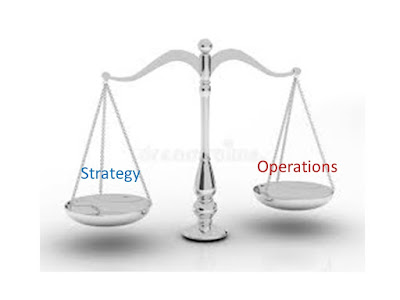
There is a constant balancing act between strategy and operations, and it gets even more challenging during periods of change or near impossible during significant chaotic events. COVID has brought this issue front and center with the increased speed of decisions and intelligent actions on several fronts. We aren’t through this threat scenario yet, but we can expect more threat and opportunity situations to emerge globally and locally. It puts a premium on superior insights, optimal decisions, and an excellent management overview. It means that the links between strategy and operations need to be optimal while allowing for emergent change. The days of the steady course are numbered at worst and only temporal at best. It means that an "Insight First" approach based on "Contextual Insights" to stakeholders is needed.


What Are the Links Between Operations Strategy and Business Strategy?

The business strategy is the overall business vision looking further ahead and anticipating the direction and business wants over a long period. The operations strategy is to provide a plan for the operational functions to make the best use of an organization's resources. Therefore, operations strategy must be aligned with its business strategy to enable the company to achieve its long-term plan. In addition, it means that its operations must be agile enough to support strategy changes while feeding monitoring information that might indicate trends that imply a change to the current strategy.

Example Checklist for Methods Linking Strategy to Operations

The recipe for linking strategy to operations has some essential ingredients that much be put together to support optimal results in several changing contexts. First, it means that connecting “what to how” is critical to be kept optimal and ready for change. Ideally, each company should have an integrated method and supporting toolset. The methodology must link the what and the how in a well-woven way across organizational stovepipes and business boundaries.

WHAT FACTORS:

Vision and Mission

Strategy / Scenarios

Critical Success Factors

Risks / Patterns / Events


HOW FACTORS:

Policy / Rules / Boundaries

Objectives / Goals

Projects / Initiatives / Milestones

Processes / Orchestrations

Organization / Partners


Example Checklist of Functionality in Tools Linking Strategy to Operations

Supporting a comprehensive methodology that links strategy and operations that delivers results should be a tool suite, generally a digital business platform that focuses on results, change opportunity, and change management. This platform/tools suite should link/integrate many functions and features that deliver business outcomes. This highly integrated platform has to work seamlessly with the method across functional silos and help focus participants on results. A management cockpit often visualizes the results that build a base for automated management functionality built on top of this integrated platform.

Strategy Planning Features

Strategy Performance Reporting

Balanced Scorecards

Operational Performance

Contextual Analytics

BI Dashboards / Fast boards

Collaboration Features Organized by Results

Real-Time Chat That is Visible to All

Audit Trails by Data Point

Action Plans Linked to Stakeholders

Integrated Risk Management

Integrated Process Management

Integrated Low Code Features

Integrated Process Mining


Net; Net:


There is a delicate balance between operations and strategy. At the same time, the obvious and traditional approach is to lay a plan and implement it optionally at the operational level. It works well in periods of stability, and the active monitoring points to more optimization. However, in a more emergent world with change, operations can point out emergent signals and patterns that may suggest a need for change. A solid methodology linked with an integrated platform will allow for both proactive and reactive strategy changes and monitor the effect of major and minor changes. Organizations should be pursuing this balance with the help of an integrated method supported by a corporate performance digital platform that embraces the management cockpit.

 
Please Help with A Survey On Management Cockpits by Clicking Here You will receive a summary of the results if you leave an email address in February. Please be patient with the initial screen and use your down arrow on the drop-down selections.

Additional Reading:

Frictionless Management

Real-Time Fast Boards

Management Cockpits

Real-Time Strategy

Management by Wire

AutoPilot Management