Showing posts with label knowledge Workers. Show all posts

Tuesday, November 4, 2025

AI & Process: The Ideal Combination

Quite often, organizations/people become enthusiastic about the potential of particular digital technologies, and they tend to ignite a fire of their own. As every technology goes through growing pains, like AI right now, it either fizzles out, fails, or gains altitude through wise leverage in practical ways to deliver business or personal outcomes. A really good way to ensure AI continues to deliver is to pair AI  with processes. There are three ways for AI and processes to work together. We recognize that various processes and types of AI can be combined to achieve successful outcomes. To read more on the different types of AI, click here, and to read about the types of processes, click here. There are three major ways to combine these proven and useful technologies enumerated below.


AI Designing the Best Processes:

This is where a business professional or individual describes the types of results, the resources available, and the activities necessary to produce those results. AI can then suggest contributing mini workflows, process snippets, or end-to-end processes. The designer can select the best-of-breed combination of workflows or processes that best suit the situation. This is a new and emerging approach that is likely to gain popularity and can be represented by a process model for human approval. 

AI Supporting Existing Processes: 

AI has the ability to serve processes by supplying instantaneous data and information sources to the processes themselves or the resources participating in the process at the nanosecond level. AI can also interpret in the proper context to make crucial decisions in operational, tactical, and strategic processes, supervised or unsupervised. Upon appropriate decisions, AI can help take the proper actions. Resources can be supercharged to tackle more complex decisions and tasks with the aid of AI. The processes and the supporting resources are mostly in control here. 

Process Supporting AI: 

When AI is driven towards outcomes that are described by goals and limited by guardrails, processes can be supported by completing actions that AI deems appropriate at the time. AI could be on the edge and collaborating with other AI agents statically or dynamically in this case. AI can also be monitored as it follows its chosen paths by representing those paths in a process model that can be interpreted by humans or other technologies in a standard interchange format.  

Net; Net:

Process and AI are well-suited for each other under a wide range of circumstances, as process provides a framework for accomplishing both simple and complex results. While AI appears to be struggling on the vendor side due to consolidation and pushing too far too fast, the adoption of AI can be accelerated in businesses and among consumers by integrating it with existing processes and customer interfaces represented by processes. 


Wednesday, January 29, 2025

Top 5 Predictions for 2025


1. Change will dominate


Change is accelerating, and the environments in which businesses and individuals participate are changing. Complications and emergent complexity will increase, thus pushing situational analysis to the fore. While more information sources on trends and potential change are available, few businesses are taking advantage of dealing with change proactively. Those who make situational analysis a proficiency will make dealing with change a key to thriving in 2025 and beyond.

Read About Change:

Situational Analysis

Situation Analysis with SWOTS

Big Change and Peeps

2. Lack of Speed Kills

Organizations and individuals that can't keep up will be in for uncomfortable days ahead. Not only will proactivity be necessary, but the ability to adapt with the proper speed will become a cherished proficiency. Organizations need to see where they are in real-time and make decisions that follow expected and unexpected situations at all levels. Quickly taking the right actions is the most crucial ability for organizations and individuals. Bombardments from bad actors and impure data/information will complicate it.


Read About Speed:

Real-Time Awareness

Decisions, Decisions

On Point Actions


3. AI will be a Force Multiplier

Many facets of AI will gain momentum in 2025. AI will be essential to deliver productivity gains necessary to move the needle for GDP growth while reducing the hours worked for organizations and individuals. AI will unlock and multiply human potential in new and better ways. AI will be embedded in more and more interactions, processes, and applications in 2025. AI will act as agents to complete tasks for humans, enhance skills as humans complete their assignments, and give knowledge and advice in various domains and roles that humans participate in. It makes no difference if you are a consumer, employee, investor, or creator; AI will be there in emerging ways in 2025. Ethics will be tested in 2025 as some use AI in unexpected ways.

Read About AI Actions

AI for Good!

Fear of AI is Overcome

AI is Productive


4. Many Facets of AI

Many, but not all, facets of AI will make significant progress in 2025. Typically, flashy forms of AI catch the eye of the news and markets. In 2024, it was Generative AI, and in 2025, so far, it's Agentic AI. While markets tend to follow the flash, with AI, it's more than the flash. Past forms of AI will continue to build multiple baselines while the "AI du jour" will cast its temporary spells. AI will likely be used in combination with other digital technologies to find soft spots for increased productivity. It won’t be just automation; it will be assistance as well in 2025, leading to augmentation by AI and teamwork with AI.

Read About AI Types

Types of AI

AI More in Control

Automation & Assistance


5 Govern Now or Pay Later

While we all wait for governance and legal frameworks from the strategic and governmental levels, we need to do our job by setting proper goals and boundaries for AI. As AI emerges, setting up good goals and boundaries will be essential, along with auditing outcomes. Governance will lag until something bad happens at a local or global level. There will be goal and boundary conflicts until an overall framework is agreed upon and enforced, but I would settle for the framework for now. Enforcement will evolve slower than the framework initially.


Read About AI Governance

Goal Life Cycle

AI Needs for Governance Over Time

Key Technologies for Goal Management


Monday, October 21, 2024

What Have Folks Been Reading in the 3Q 2024?

First, I'm pumped that the blog activity surpassed 1M hits with unwanted comments cleaned from vendors trying to leverage my posts. Unsurprisingly, AI was the most exciting topic of interest in the last months, as shown in the activity by the topic graphic below. The next was a tie for second, with Digital and Customer Journey topics gaining attention. Collaboration is still an important topic according to my audience, but Process is still hanging in there after two decades past prime attention. Also below is a graph depicting activity by country over and above the US and China, which dominate the activity. See below.


Monday, October 7, 2024

AI Productivity Scorecard

Organizations face challenges in this AI era, including justifying each AI-enhanced project, measuring the results' effectiveness, and determining where they are on their overall AI productivity journey. While the big picture regarding the productivity race is evident at the national level, we are participating in increasing productivity to create gains in wages, better corporate profits, and raising living standards. See the big productivity picture by clicking here.

Why an AI Productivity Scorecard?

Organizations must understand where they are in unlocking AI's full benefits and increasing optimal productivity. While each organization's AI journey is unique, knowing where organizations are regarding their full AI productivity potential is essential. The scorecard can act as a radar screen to show where organizations or individuals are in terms of full AI potential. Last year, I published a rough guide for AI progress that identified three significant eras for AI. Click here for the three major eras. While it is helpful to know where an organization utilizes AI, a more complete and multi-dimensional productivity scorecard is needed to score how AI is being leveraged for optimal AI productivity over time. See Figure 1 for the AI Productivity Scorecard.


Figure 1 AI Productivity Scorecard

AI Productivity Scorecard Explained

Ideally, an organization has pushed its productivity to the uttermost limits of possibility; in reality, today, few organizations have pushed the boundaries to optimal because of the investment in methods, skills, and techniques that will take time to mature and prove themselves to be very effective. Most organizations start small and grow to complete potential over time. The scorecard aims to measure the progress on the path to optimal productivity. The early AI efforts will start at the center of the radar screen (spider diagram) and move to the edges over time. The scoring from 1 to 5 will be a judgment based on the state of AI at a specific point in time. Remember that AI will grow and evolve; the target could be a moving goal line. To that end, I described what to look for on each scale (vector). While it isn't perfect, it will give business leaders a relative way to measure progress over time. Remember that the scorecard can be used to measure projects and efforts first. However, aggregate efforts can be overlaid for an overall score for an organization, be it a division of the entire enterprise.

Work Impacts Scale: (AKA productivity in work complexity)

AI is excellent at automating repetitive tasks, and there are lots of organizational opportunities to automate totally, assist humans, or collaborate with other AI components. See the Top 20 AI Technologies for 2024 by clicking here. The challenge is having AI agents/bots assist with or make decisions independently within guardrails of goals and boundaries. In an AI-heavy usage scenario, AI makes plans without human collaboration and acts on them with measurement later. It is essential for instantaneous and emergent situations.

Paradigm Impacts Scale: (AKA productivity in problem difficulty)

AI is excellent at optimization as it makes fewer mistakes than its human counterparts. This means that AI clearly sees creating more optimal outcomes while goals shift faster. It assumes that the data it consumes is reasonable, but AI can sometimes sense out-of-whack data. AI can suggest alternative approaches and enhance existing optimizations with new paths or alternative solutions. It involves the creativity of a team of generative AI and humans, initially leading to more AI-driven approaches. In some cases, AI can develop breakthrough views and approaches that can be implanted and optimized on the fly.

Context Impacts: (AKA productivity in scale increase)

AI can help with personal productivity by simplifying each task with more advanced research. However, thought needs to be given to the overall journey a person as a customer, employee, or partner is on towards individual goals that may need to be incorporated with team or organizational goals. Teams often have different skills that must be collaborated on one work impact (explained above). AI assists these teams in incorporating stovepipe skills into optimal team results. Organizations leverage individuals and teams that may or may not have conflicting goals to create the overall organizational goals. AI is great at seeing the big picture and tuning individual and team goals to dynamically support overall organizational and cross-legal entity goals.

Problem Impacts: (AKA productivity in change)

Problems known and static are easy for AI to help with, but AI shines where change is evolving the goals and governance targets. AI is built for change and thrives where things grow on trend lines. There are, however, situations that evolve beyond plans and anticipated scenarios. These are known as emergent problems, which used to be quite rare but are happening more and more. AI deals with changing dynamically and recognizes new scenarios that may require replan and adjustment.

Speed Impacts: (AKA productivity in acceleration)

When work is done regularly, it is much more apt to be automated in a normal and preprogrammed way. As business change velocities increase, AI plays a role in adapting to itself in new ways. In fact, AI agents and bots are great at sitting on the edge and acting instantaneously to dynamic optimization and governance goals. The faster the need for response, the more AI will likely play a key role.

I'd now like to demonstrate the use of scorecards through three examples. The first example is AI in automation. The second example is holistic and dynamic management with AI, and finally, the third example is emergent optimization.

Example 1: AI & Automation (see Figure 2 AI For Automation Scorecard)

Automation is the usual spot where organizations will apply AI successfully. In the scorecard, I depicted a typical AI automation project or program. Typically, these kinds of efforts are aimed at intelligent actions that focus on optimizing results with known problems at expected frequencies but range from personal to organizational impacts. A few example use cases include:

  • Smart Chatbots,
  • Straight Through Processing
  • Knowledge Assists
  • Recruiting
  • Quality Inspections and Control


Figure 2: AI for Automation Scorecard

Example 2: AI & Management (see Figure 3 AI for Management Scorecard)

Dynamic management at the speed of change while detecting evolving conditions and suggesting tactical or strategic decisions is where AI shines. While the scope can vary from organizational to individual, the example below is aimed at the organizational level. A few example use cases are:

  • Supply Chain Management
  • Management Cockpits
  • Production Line Management
  • Warehouse Management
  • Logistics and Delivery Management


Figure 3: AI for Management Scorecard

Example 3: AI & Service Team Deployment (See Figure 4 for Service Teams)

Infrastructure servicing is a problem that must be optimized and enhanced over time. Let's use an above-ground pipeline that spans thousands of miles over various terrains, where drones fly over to look for issues and deploy service teams to remote areas when a potential leak is sensed. The drone images will be scoured for known problems and analyzed for evolving conditions, considering local weather, material decomposition, and position norm contexts. Speenorms because of the safety and environmental concerns; however, false alarms are incredibly costly.


Figure 4: AI for Service Teams Scorecard

Net; Net:

Progress in AI adoption and resulting productivity needs to be measured, even though scientific precision might not be attainable. Though I have searched long and hard for a way to measure AI's progress, I am still looking for something useful. To that end, I have cobbled together something that will help individuals and organizations have a rough measurement of progress toward greater productivity with AI. I hope this helps others. However, comments for improvement will be appreciated.

Additional Reading:


Tuesday, September 17, 2024

AI Must Increase Productivity or Else

The theme for the coming years will be a significant increase in productivity. According to my favorite definition from a Google search, “Productivity is a measure of performance that compares the output of a product with the input, or resources, required to produce it. The input may be labor, equipment, or money.”


AI must be a key driver to not only innovation but also a way to increase baseline productivity measures. It is a must at the macro level, by country and industry, and at the micro level, with AI-enabled projects. This is true for all on a personal basis and an organizational basis. It is not a zero-sum game where organizations win, and individuals lose. It balances organizational outcomes gained with personal satisfaction without time synchs forced on individuals inside or outside an organization. The good news is that we have high productivity rates in mature economies. See the GDP Per Hour Worked by Region in Figure 1. The bad news is that the productivity increase rate is not what it could be, averaging only a meager 2.1 percent on average since 1947 and a shallow level of 1.6 percent recently. See Productivity Change Rates by period in Figure 2.


                                          Figure 1 GDP Per Hour Worked by Region


The additional good news is that AI is capable and is growing in its influence and impact by the minute. As long as AI is applied in a goal-driven fashion governed by reasonable boundaries, the possibilities are endless. The individuals who control these goals and constraints will lead the way to greater productivity. We can’t sit still and must apply AI aggressively on a local basis, constantly looking to the global impact incrementally. Every country can benefit from AI and potentially leap up in productivity.


                                      Figure 2 Productivity Change Rates by Time Period

Net; Net:

AI has the potential to decrease the hours worked for all of us. An accurate "more with less" enabled by AI. This is true for those who complete repetitive simple tasks, those who make decisions at the tactical level for optimization of work while taking great care of customer, employee, and partner journeys, and those who set strategy or create response scenarios in an ever-changing set of markets, industries, regions, and legal frameworks. While AI is exciting in its potential for productivity, it carries the fear of change and control. Let’s manage this once-in-a-lifetime opportunity AI gives us. This is the first post in a series on the productivity and application of AI. Watch this space.

Thursday, May 9, 2024

Stepping Up the Music Game

 Most of my friends and family know about our new album, "Ready or Not," but its reach has surprised all of us. The numbers are encouraging, and the comments about the quality really excited us. We reached a worldwide audience and 62K streams on Spotify alone. See the charts below for the last 28 days' worth of activity on Spotify. Just search for Jim Sinur on your favorite streaming service. If you don't stream much, click here for the new album. The most popular songs are Forgive, Mercy Me, and Kinder, according to the numbers (see below). My favorites are Cry for Creation and Restoration. 

The AI Gen videos are also drawing folks into the music. In fact, we have had some fortune with longer songs because of the compelling nature of the videos. Click here for all the videos completed to date. The two newest are Mercy Me and Restoration. My favorites are Cry for Creation and Forgive. The core team of Ethan Foxx, Jimmy Caterine, Pete Crane,  and I hope you enjoy the creativity, core stories, and professional engineering. Primarily, we hope to see you dancing to some of these tunes someday. 


Sunday, March 17, 2024

Operationalize AI Effectively with Processes

AI and processes go together very well, and the risk of trying AI in processes is pretty low, as process resources can all benefit from being more competent and reacting faster to changing conditions. AI is typically aimed at traditional/everyday processes. Still, organizations are also looking at more game-changing impacts related to new products where innovative business models can be trialed with processes and data. AI also aims to address emerging business changes that show new opportunities and threats. It’s not just pure automation and optimization, though there continue to be benefit pools there. Processes are often the basis of organizational actions that cross internal and external boundaries. These processes often employ resources that could benefit from AI’s assistance, especially where knowledge, decision-making, and agile optimization based on changing or emerging goals are required. I was asked to write a white paper on operationalizing AI in and around processes. This paper is available for free from a processes vendor called Agilepoint. 


There are a number of blog posts on AI here, as well as processes. here are some exciting posts on AI

AI Posts


Tuesday, February 27, 2024

Top 5 Technology Trends for 2024


Last week, I published the Top 5 Business Trends for 2024 (click here), and this week, I narrowed down several technology trends to my top 5 that organizations need to start responding to intensely in 2024.

Harnessing Usable AI

Most organizations will probably have some form of the many types of AI in progress. Progress could range from experimentation to production-enabled and active in several business and technology domains. Since organizations do not fear another AI Winter because of broad-based data-driven successes, they are looking to take advantage of various kinds of AI (click here for AI Tributaries and Types for 2024). Significant efforts in and around Natural Language Processing (NLP) will allow for human understanding and appropriate responses like generating human-like interfaces in chatbots and language translation services, for example. There will be more virtual assistants that will supercharge customers and employees to be more effective even beyond their inherent knowledge and skill levels. It will expand AI to voice, image, and video analysis to create a more inclusive context for decisions and actions for carbon-based participants and robotic assistants. There will be an emphasis on emotion recognition to deal with the human factors of doing business. This new capability and power will need to be protected, so intelligent cybersecurity will get a boost to detect and prevent threats leveraging AI. Expect organizations to use AI until governance issues become the focus.


Leveraging Intelligent Customer Experiences and Processes/Applications

Organizations will likely start switching from flow-directed approaches to goal-directed ones where the flow is based on the changing goals of a customer journey or process. Savvy organizations will include their goals with the goals of customers, partners, and employees in the goal-directed approaches and balance seemingly conflicting objectives in a balanced approach. Personalization will now consider goals and measure feedback through real-time observation and analysis. Of course, better user experiences and omni-channel experiences will continue as table stakes, but more will be demanded. User-centered design employing more gamification components will play a role as AI and algorithms will expand their reach to customers, employees, and partners to advance Customer Relationship Management (CRM). Human/ tech collaboration will get a fresh look, including new forms of augmented reality over time. Continuous improvement and aggressive automation will continue in times of stability; however, changing conditions may unhinge current optimization patterns. Intelligence will be used to adapt processes and user experiences more acceleratedly. Organizations will leverage predictive methods and more aggressive scenario management and monitoring. It will be a necessity with supply chain shifts and optimization particularly.

Moving to Convergent Business and Technology Platforms

While individual technology stacks bring benefits, costs, and challenges, organizations will eagerly watch for the convergence of focused functionality into platforms that more easily integrate technology functions to enable faster and cheaper business results. Desire will force broader technology options at a more affordable cost and potential mergers and buyouts. Convergence will create aggregated specialty platforms and generalized digital business platforms. The effect is fewer vendors to manage for organizations and more integrated business/technical functionality. Examples include generalized Digital Business Platforms (DBP), Business Application/Package Platforms, Sales/Customer Platforms, Process Platforms, Collaboration Platforms, Data Science/Analytic Platforms, Automation Platforms, Lowcode Platforms, Cloud Platforms, Data Mesh Platforms, and Security Platforms. For a quick overview of the players, click here. I expect AI platforms to emerge as success is experienced and integration becomes necessary.

Building on Intelligent Infrastructure

As all business-driven intelligence and agility become a competitive weapon, the need for intelligent infrastructure will emerge quickly. It means that the infrastructure players that leverage AI and analytics in either a reactive or proactive manner will flourish. It will create a race to intelligence under the covers of processes, systems, and applications. Edge computing and IoT integration are perfect examples of where putting intelligence at the edge or even outside of a business process will be necessary. First, it will be monitored soon after there will be recognition of the need for decisions close to the edge and intelligent actions to deal with the changing conditions. Eventually, AI-driven intelligent bots or agents will be brokering response patterns at the edge. Examples of success today would include Smart Cities infrastructure. Digital twins will flourish in intelligent infrastructure, leveraging clever hybrid and multi-cloud along with smart data meshes. All of this will require smart security that is blockchain-enabled. In the future, quantum computing exploration will keep a watchful eye on the swarms of agile AI bots responding to infrastructure and business needs.

Living with Governed Leverage with Sustainability

Like it or not, organizations will have to balance their business results with the trail of impact their business activities create. There will be the emergence of renewable energy integration where it makes sense. Recycling or recreation will be more emphasized in 2024, along with eco-friendly packaging solutions. Smart buildings that leverage AI for energy efficiency optimize energy consumption in many aspects of an organization's activities. Remote work will play a role in the delicate balance of progress and preservation. Technology will be essential in an organization's ability to measure, monitor, and reduce its carbon footprint over its complete operation as and its supply chain. Water management is becoming a vital resource to monitor and optimize, leveraging tech and advanced waste management technology and techniques.

Monday, February 19, 2024

Top 5 Business Trends for 2024

Adapting to Dynamic Business Conditions

The first trend is around businesses staying dynamically adaptive to change. Organizations must go beyond scenario planning exercises that sit on the shelf. While the planning exercises are proactive and sound, they also allow businesses to develop strategies for the various likely and unlikely scenarios. Savvy organizations will test the most likely scenarios, making an organization better prepared to adapt when change occurs. This means organizations must cultivate a culture of innovation that builds on leveraging agile methodologies and employee training/development. Cross-functional teams with individuals who embrace technologies by staying abreast of technological advancements will often develop solutions that support executive goals within alternative scenarios. Strategic partners will also help craft solutional alternatives, including backup partnerships. Remember that organizations are moving to real-time data/event-driven decisions that will adjust processes and applications. Careful planning will help legacy platforms and packages remain in a changing business environment. Managing change is essential in a world that is speeding up to new rates of change. This is not a "one-and-done" exercise, as adaptability is an ongoing process that needs regular reassessment.


Augmenting Your Customers

While most organizations think they are creating and refining user-friendly interfaces, the reality from the customer side is another thing. Customers find most interfaces are designed from the inside out, leveraging existing software and support teams. While multi-channel engagement and responsive customer service go a long way to helping the customer reach your organization's goals, the reality is that the customer journey is rarely just about your transactional efficiency when working with them. Think about how organizations had outsourced the keystrokes to the customer and the dumb chatbots they must deal with daily. To add insult to injury, the surveys are designed to get managers their rewards, not the customers' perspective. It's time to think "outside-in" from the customer's goals through the interaction with your organization and its legacy systems. This will give organizations new insights to personalize the experience, including smarter chatbots that recognize feedback in voice or visual cues to include sentiment, both positive and negative responses, in real-time with transparency. Let's assist our customers in their journeys, not just optimize costs for organizational goals based only on transactions your organization controls. Let's shift from reactive cost containment to proactive customer satisfaction and loyalty.

Augmenting Your Employees and Partners

Often, employees become the shock absorbers between your organization and other constituents. This means that they deal with the lack of integration across internal stovepipes that live with conflicting internal and external goals. What employees want is better job satisfaction, recognition/rewards, flexible work arrangements, and mostly career growth opportunities. They are driven by the need to keep up with ever-rising costs in their life situations. While some of these needs can be managed with a change in management tactics, employees need help. They need a better collaborative work environment with effective communication that helps them develop and learn to augment their career growth. Why not remove their "dirty work" with automation and let them become more knowledgeable workers through AI augmentation and reward-driven employee empowerment? Giving employees more autonomy and decision-making authority within their roles or across stovepipes with collaboration with others and AI bots is desirable. The best suggestions for continuous improvement will come from happy employees. All organizations need the table stakes of wellness programs, diversity, and workplace perks, but augmentation for advancement will be a key theme as we advance.

Managing Elusive and Shifting Costs

While the traditional methods of cost analysis, budgeting, expense monitoring, and control will still deliver savings for organizations, there are additional issues to consider. Negotiating with suppliers and partners to seek better deals, discounts, and more favorable payment terms is a great place to find incremental savings. Some big numbers in process optimization employ cost-reduction technologies that are now smarter than those of previous generations. Process mining and AI monitoring are good places to find nuggets of opportunity. Organizations may have to invest in technologies that streamline processes, automate repetitive tasks, and improve efficiency. It can lead to long-term cost savings and increased productivity. Cross-training and workforce optimization can help leverage existing employees or bots to handle various types of tasks and responsibilities. It creates excellent leverage and flexibility when experiencing peaks that typically require hiring additional staff. Telecommuting and remote work is a great cost-cutting trend for office costs. Ensure cost cutting is not arbitrary to meet numbers only to hurt long-term trends. Often, overzealous cost-cutting on minutia sometimes backfires with unexpected behaviors.

Providing Secure Digital Commerce

Ensuring secure digital commerce is crucial to protecting your business and customers from potential security threats. While customer education on best security practices, adherence to payment standards, and continuous fraud detection in real-time to mitigate suspicious activity leveraging machine learning are table stakes, there are additional efforts to take for organizations. Two-factor authentication is a must for user accounts. It adds a layer of security by requiring users to verify their identity. Regular backups of critical data combined with comprehensive data plans are essential in the event of a security incident. Encryption of all stored data protects data in case of a breach. Organizations are encouraged to choose secure hosting providers and cloud services that prioritize data security. Hosting environments should have robust security measures, including firewalls, intrusion, and detections. All your infrastructure and business software needs to be updated by patching and updating your systems. Regular software updates can close vulnerabilities and protect against known security threats. Above all, conduct regular security audits and vulnerability assessments of your e-commerce platform. Identify and address potential weaknesses in your systems to stay ahead of emerging threats. Remember that this is a war with bad actors.


Wednesday, November 16, 2022

Winning Change Management Delivers

It matters not what kind of situation organizations find themselves in; change is always present. Change often implies an organizational and individual risk that creates angst. These facts alone should drive organizations to be great at change, but unfortunately, they generally are not. In today's world, it seems like stability is even more elusive, with change and potential change hovering around every corner. Therefore, it puts a premium, making change management a core business capability. What should organizations do to improve the change process to survive, thrive, and capitalize on change? There are three things that I would point to that are enumerated below:


Continuous Alignment on Goals:

Change is no longer a project with a defined start and end. Instead, it is continuous and accelerating. Because of the agility needed in the world today, there is a significant need to keep teams focused on their goals and any change or refinement of those goals. It means that the goals become a first-class visibility object in the change process. Because alignment is crucial because the change cycle will likely be split into many pieces, all progressing while changing the interactions of several advancing teams. There are two key enablers to making this happen. One is a shared repository of goals and all the supporting content for all to see. The other is a strong collaboration and communication capability to keep everyone abreast of progress when goals are stable and changes if the goals shift.

Focus on Watching the Change:

In an emergent world, change management must provide Just-in-time feedback to all recipients in a synchronized fashion, so all can act on it appropriately. Change sponsors often only look at the emergent change's operational and tactical results. It is a significant miscalculation. Sponsors need to be laser-focused on the actual change process itself. This way, the results will align with expectations, but more importantly, drift can be detected early to adjust during the change process. The sponsors will lead the way to the teams keeping a sharp eye on the progress of the change management process.

Upscale Team Change Skills:

Because of the increased frequency of the multitude of sources of and impact of today's change, organizations had better make change management a core competency. In some instances, this will become a survival skill, whereas, in other circumstances, it will be a necessary part of a game plan to win. As we all know, people are the key to change, and they have an emotional tie to the changes. While they might like the vision, some folks fear the change. Here, empathy is crucial in keeping leaders and team members on an even keel. In addition, clear visibility and effective communication are necessary without all the overhead of meetings.

Net; Net:

Change management is crucial for organizations to succeed and drive outcomes. It is common knowledge that study after study points to a 70% change failure rate. On the horizon, all organizations are seeing more change coming. We are at a critical juncture to "Get Great at Change" or else. The convergence of more change than ever and being poor at it paints a grim picture. Change management has risen to the top processes to get great at. You can't just hire a consultant that works with your executives and declare change; you must get much better at the change management process to make changes effective. It should become a core competency.

Additional Readings:


There is one organization that gets it and helps you grow competency in change management that doesn’t take a vacuum cleaner to your pocketbook. Here is a pointer to some of their writings


Monday, October 10, 2022

Survive Changing Change

The good news is that organizations know an organization must change to succeed and drive business outcomes, but change management is complex today. The bad news is that change itself is changing from "point-in-time" to "all-the-time," and organizations had better get great at it because change rates are accelerating, as you read this post. It is on top of the fact that organizations have traditionally struggled with the change in calmer times. There will also be more relaxed times to catch the collective organizational breath. If you believe the numbers floating on the web for traditional change failure rates, the cards are stacked against organizations. It's time to turn the tide, folks.


Change is Changing:

Change is becoming emergent and real-time. Change is no longer a project with a defined start and end. It is continuous and accelerating. Today we have significant opportunities with digital technologies to automate and shrink time and costs out of our processes. Still, things are changing so fast that optimizing with automation is becoming a big challenge. Today our customers, employees, and partners are under tremendous pressure, fueling the fire of change. Customers want organizations to shift from a product, service, and process-driven approaches to empathetic outside-in sensibleness. We ask people to move from fixed to flexible efforts along with our underlying organizational infrastructures. We ask them not to fear change but to embrace change as the new normal.

Change Management is Changing:

In an emergent world, change management must provide Just-in-time feedback to all recipients in a synchronized fashion, so all can act on it appropriately. This kind of feedback allows recipients to adjust their behavior and witness the effects of these adjustments on performance and outcomes. This information must be personalized in a way uniquely relevant to the users in their context and contributions to the greater group goal. It will often include sidestepping the hierarchy to create direct connections among people while stakeholders can watch the adaptation. The intermediaries must not get in the way of resolution. Change management will have to build empathy, community, and shared purpose as people are no longer in a common location to collaborate. Providing an outlet for colleagues to share and see all the information, including progress and commentary, is essential. In this real-time change, world progress must be demonstrated visibly while linked to changing goals. The problem is that today’s methods, tools, and techniques are too slow and not goal-led, with real-time progress immediately visible.

Three Key Coping Mechanisms to Survive:

· There is a need for real-time dashboards where active watching and learning can be encouraged and assisted. It gives timely information in a customized fashion to the right people.

· There is a need for features that help with situational analysis so that decisions can be assisted and carried out in a thoughtful and timely fashion, with or without automation.

· There is a need for a goal-directed set of collaborations that give guidance and shared visibility to all the roles implemented and affected by the changing change.

Change Case Studies:


Human touch case study 

Net; Net:


Change management is crucial for organizations to succeed and drive outcomes. Over 75% of organizations want to add more change management initiatives in the coming years. It means investing in better change, even if it is like "Nailing Jell-O to a Tree." It will require a shift in organizational culture while applying a new generation of digital communications as we engage our constituents in real-time and continuous. 

Monday, April 25, 2022

Autism Transformation Case Study Leveraging a Goal-Led Approach

Most of us are tasked with transformational change, and as a result are challenged to assemble, coordinate, and track the methods, resources, and tools necessary for transformation. While this case study is still ongoing, the expected results will send ripples throughout the health and therapy industries. It's going to change the way treatment plans work for autism forever. It is an innovation that will become a movement because it is newsworthy and worth watching. It leverages goal-led collaboration and takes treatment to a new level of efficiency and effectiveness. Let’s dive into this exciting transformation that promises huge industry change by treating the whole family that autism impacts.


The Challenge

· Most experience delays in getting diagnosed and many are not getting diagnosed at all

· There are waitlists for services, and many are not Receiving the hours they are prescribed

· Care across the services provided is not coordinated


The problems with managing autism from diagnosis to service completion are immense. First and foremost, children are diagnosed late because the hurdles to getting diagnosed are high. It is almost impossible to get approvals from insurance companies to leverage the scarce resources of counselors and move on to the methods and technicians that can help the situation. The other major issue is that the parents are considered in the treatment plans, and the whole household is not considered for treatment. Often getting the autistic family/household to services is quite challenging. Also, the amount of paperwork and red tape is taking away from the scarce treatment resources. Therefore, the failure rate is unacceptable even when permission for counseling is granted.

The Solution

It starts with goal-led frameworks designed to optimize the end-to-end experience for the patient, the family, and service resources. It begins with placing the parents at the center of the process by teaching the value of long-term support for the whole family unit throughout the treatment plan timeline. Next, it focuses on several vital subgoals to get through the insurance authorization and get things going quicker. Finally, it breaks down into these five subgoals that are being coordinated individually and collectively to attain the primary goal:

· Diagnose as Early as Possible

· Get Access to Services as Quickly as Possible

· Activate Parents

· Deliver Care to the Family

· Graduate to New Freedoms


The Benefits

The benefits were derived from goal-led collaboration, and continuous optimization individually, and collectively aimed at the primary goal. There were immediate benefits for more family happiness while unlocking the potential of the child and the family unit in new ways. The parents become educated advocates following a customized and designed plan leading to more direct results quicker. It reduces iterations and false steps, optimizing the service resources. Communication with all parties helps in each case and treats the problems holistically. There is clarity around actions and faster paths to results through following a customized and designed experience. It also enables treating younger and younger children giving treatment momentum early in children's lives.

Net; Net:

This approach generates happier families living to their full potential as early as possible while optimizing the counselors, cases, service providers, and administrative tasks. The goal-based system allows for continuous and constant iteration for better results keeping all parties up to date on the status of people and procedures. It will prove productive for kids at all levels on the autism spectrum. Watch this space for an update.


This case study was provided and assisted by Parallel. Click here for a link


Case Study Goal Life Cycle Impacts Highlighted in Blue


For an Explanation of the Goal Life Cycle Components Please Refer to the Blog Posts Below

For a Goal Life Cycle Explanation, click here

For Better Goal Management, click here

For Goal Led Technologies, click here


Tuesday, March 29, 2022

Businesses Require Better Goal Management


Because of the dynamic nature of business today with wars and rumors of wars, pandemics, and weakened supply chains, goals need to rise in importance. While goals should be specific and measurable, goals will change with greater frequency. Therefore, goal attainment will also have to be watched more carefully. We are upping the ante on better goal management and focusing better on the business supports for goal management and goal attainment. Better goal management requires a new level of transparency and communication capabilities than in the past and follows a consistent goal cycle. Click here for a suggested Goal Life Cycle (GLC). While there still will be the issue of variations by legal system and location, the adaptation of staff and automation will have to be faster and sharper than in the past. While there will still be steady-state goals and boundaries periods, the change increases its velocity. What are the foundations for goals in a changing world? This post will dig into the primary foundations around goals.


Goals for People

Better goal management needs a good dose of people power for both the management of the goals and the attainment of our changing goals. In today's world of collaboration, people are a crucial resource for establishing, maintaining, and changing goals. The problem is that collaborations today are somewhat random and not organized around completely transparent goals. When changes occur, the stakeholders that are the goals stewards are not given complete visibility to the change, and worse yet, all the participants are not clued in to how they should change their behavior. Therefore, all goal management and goal attainment activities should be tied to goals naturally and informing way.

Goals for Processes

Better goal management should directly link goal changes to the sequence and outcomes of business processes. All resources that contribute to a process's success need to understand/support the goals, goals changes, and direct actions required for new goal courses. While processes are often on the front line of detecting a need to adjust goals through exceptions or changes in business event trends, their significant contribution revolves around goal attainment. Changes in goals often mean a shift in process actions and even new process paths or step sequences. Collaborations with all the process resources for new or changed purposes are essential; however, enlightened organizations have adaptable processes that automatically adapt to new goals or milestones.

Goals for Programs

Better goal management should allow for quick adaptation of change to existing programs. The program could be a one-time event, like a conference, or a repeatable set of linked people, processes, automation, and platforms. Better program management means that learnings need to be faster and more comprehensive, and responses need to be planned and delivered quicker. It puts a premium on thorough communication and collaboration directly linked to goals instead of random collaborations that are not connected or missed because they appear to be noise communications in error.

Goals for Systems of Automation

The problem with most automation is that they are optimized to deliver on efficiency that depends on stable goals. Packaged and legacy applications, components, and micro-services are created for a known set of outcomes. The maintainers of this automation need to be informed early of any changes as early in the cycle as possible because of the lead time to make changes in this often-brittle automation. Even if automation were designed to flex, we are seeing unexpected scenarios that will likely change the ingenious automation of the past. Therefore, early in the change cycle, synchronized goal change communications and collaborations are a must putting a premium on linking to stakeholder goals.

Goals for Supporting Platforms/Infrastructure


Often unseen supports become a change inhibitor. These could be transportation systems, physical platforms, manufacturing lines, networks, or technical system platforms. Over time these are the last to become flexible and represent constraints on supporting goal changes. Communicating with the stewards and outside vendors about the goal changes has to be early in the cycle. Many infrastructure platforms were designed with a specific purpose in mind, so communicating early and often helps these folks figure out ways to bend or extend the infrastructure. Some infrastructure changes require long lead times.

Net; Net:

We all are trying to deal with change and the downstream effects on all moving parts of the organization that need to know about or change behaviors to support new or existing goals. Communicating in synchronization, preparing for the changes, and implementing the changes needs to be done in shorter time frames in today's dynamic and flexible worlds. It is a much different world than we have been used to in the past. Better goal management, methods, and tools will likely result in our new change-prone world. It may require further training and outside perspective to prepare for better goal management in a world of constant change.


Monday, March 21, 2022

A Goal Life Cycle is Essential for Success

Most of us have seen the strategy to execution gap and wonder how to close it. This is particularly tricky when conditions and situations can modify the goals and the linkages to sub-goals that are driving to completion. Organizations must sense themselves in the context of their changing environment and adjust accordingly to reach top-level goals that cascade and guide in-flight efforts to results. Having an explicit life cycle that everyone understands and subscribes to is a big deal to reach goals and aspirational dreams for organizations and their contributors. This life cycle is the key foundation to goal management and adjustment effectively percolating through the organization in a coordinated fashion to deliver successful business outcomes. It connects well to supporting objectives and key results (OKR) and must have more rigor than just PPT presentations and EXCEL spreadsheets running the complete life cycle. Let’s explore the Goals Life Cycle (GLC)

Goal Creation

Creating upper-level goals is usually done by stakeholders in a cooperative fashion, however, these upper-level goals could be the vision of a strong and trusted leader. The advantage of a cooperative effort is the follow-on support from the functions and organizational unit leaders. These goals will be broken down into contributing efforts, all of which, will likely follow the same goal life cycle at the level they are at without losing sight of the upper goals and their specific contribution to the overall balance needed for success.

Goal Collaboration


It would be easy to set goals without gaining the “buy-in” of the leaders and contributors to the final outcomes. Collaboration should permeate the efforts of creating and executing on the goals set making sure that the goals will bear success, not violate governance and be consistent with the risk profile of the organization or organizations participating in attaining the goals. The collaboration process ensures a more common understanding of the desired results and outcomes with precited measures of success.

Goal Curation

All things good require some burn-in time or time to cure. This is particularly true when going down and out from the core stakeholders. It takes time to get minds around the goals and how they interact with legacy practices if at all. Time needs to be factored into feedback cycles initially or as the goals iterate and evolve. The key is not to allow too much or too little time.

Goal Communication

One of the crucial steps is to fully communicate the goals and any changes as they evolve as fast as possible to all those involved. By directly linking communications to the stakeholders’ goals with visible feedback, gives all a picture of the goals at any point in time. It is also critical to notify all participants when changes are taking place

Goal Co-Adjustment

It is important to evaluate the progress towards goals and the resulting changes. There needs to be an evaluation that determines the extent to which a set of efforts (program) has achieved its goals. This will require collaborative adjustments to bring the results closer to 100 percent success over time. This is where several iterations and variations can be modeled or tried. During the evaluation phase, some goals can be retired or audited for future lessons learned

Net; Net:

We all intuitively know the GLC is often iterative in nature because there are many moving targets these days and following the key sequence of the life cycle helps organizations move closer to success with fewer iterations. Having the proper support in place and working smoothly is also crucial for achieving success. The next posts will hammer home the business and technical supports necessary to achieve a goal-based culture, behaviors, and desired results enabling success. This will be followed by case studies or examples of efforts in the process.


Tuesday, February 1, 2022

Dodging A Digital Downturn

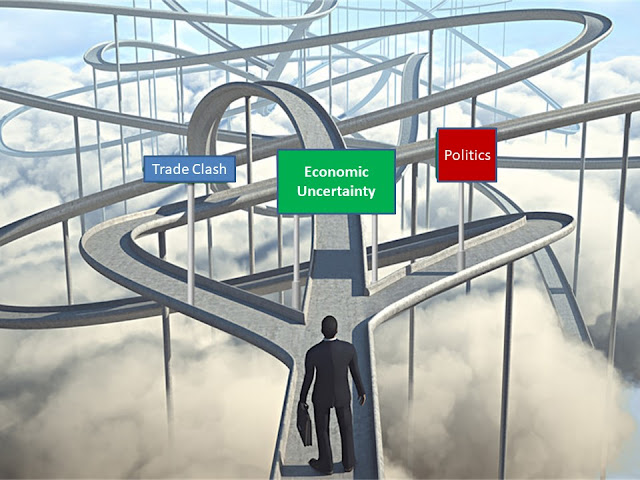
We all see the signs of a potential economic downturn on the horizon. There are no dumpster fires right now, but you can see signs of nervousness. Like it or not, uncertainty will impact all our organization’s digital efforts. It means that we will all have our outcomes tied to the kind of business outcomes that companies desire. If we want our digital initiatives to progress, regardless of their progression, we need to tie them to the best possible results from a business perspective. Here are the five desired outcomes that seem to appeal most to executives.


Increasing Revenues


The typical digital projects around revenue attract more prospects to your organization’s products and services. It usually includes adding compelling new digital channels and mechanisms to attract multiple generations increasing the sales funnel. Another primary stream is around speeding the progress of the prospects through the sales funnel by automating portions of the sales cycle. Care must be applied to not irritate prospects or add onerous tasks to sales professionals. Digital initiatives are often aimed a cross-selling/ upselling existing customers that are likely to accept offers.


Decreasing Costs


Often digital initiatives are aimed at cost reductions, and they usually deliver through various forms of automation and fast feedback from operational processes. Additional benefits can be gleaned by adjusting decisions and rules that govern/direct organizational processes and tasks. Adding more intelligence to processes and tasks is often another way to decrease costs by assisting or reducing the human resources necessary to complete work. The issue in cost reduction will be around competing with other efforts and expected rates of returns your executives expect. Linking silo efforts is a best practice for savvy organizations.


Reducing Risk


Preventing loss is a popular approach to justifying efforts. It can range from making sure your organization's actions comply with existing rules and regulations, planning responses to emerging threats, or taking proper advantage of apparent opportunities. Initiatives that bolster risk avoidance are always popular with executives making critical decisions often. Moreover, preventing loss is constantly on the mind of executives, so efforts to reduce any risk appeals.


Attracting/Keeping Customers


Initiatives that identify prospects by offering them a better experience for less money always attract investment. The more subtle efforts revolve around keeping the customers you already have. These days customer loyalty is not a given, so initiatives that help measure the voice of the customer scientifically and assist meaningful customer engagement are highly prized. It may be listening to your interactions with a customer looking for key phrases to indicate potential churn, customer satisfaction, promoter potential, etc. It may include watching the actual interaction over video channels as well. Some of the best feedback comes from employees on the front line working with customers. Adding new customers is one of the highest cost activities for organizations, so investments are needed.


Attracting/Keeping Employees


The days of employer intimidation are waning now, so attracting and keeping employees crucial for success is a more significant issue than ever. Savvy organizations are taking a new look at their processes and tasks for better treatment and leverage of employees. It may include more digital assistance for knowledge workers, but it includes removing friction from integrating silo systems and eliminating mindless tasks. Keeping employees requires creating a worker-friendly and trustworthy culture. Indeed, hybrid work environments help employees have more freedom, which is a minimal level of support. Digital initiatives can be used to gather input from employees to avoid things like we are experiencing today with the "great resignation."


Net; Net:


If the present nervousness is just a temporary phenomenon, rechecking how our digital efforts contribute to significant business outcomes is a great exercise. If more uncertainty emerges, linking to primary business outcomes will become a survival technique. If executives decide to pull back on digital initiatives, we will have to make sure key digital initiatives progress even if they become a lower priority. Remember that executives have to think they will beat their investment hurdle rate if they continue to invest in your digital projects. Knowing the hurdle rate for your organization or industry would be essential to understand when justifying digital projects. Keep in mind that digital initiatives that deliver a multitude of the five will get more support even in downtimes.


Thursday, January 6, 2022

2022 Top 5 Business Trends

Next year will be a year of focused revenue growth, streamlined time to results along the traditional cost optimizations. Organizations have learned where digital has delivered well consequently, they will be increasing their bets where results are more likely to carry the day. The emphasis on steady-state only results based on consistent KPIs will change to include more calculated innovations and emergent measures. Organizational visibility and insights will rule this year with stronger links measured from strategic direction to projects and operational results. Customer journeys, experiences, and feedback will be sharper, faster, and more frequent. Because of the skills scarcity and jobs becoming more complex base skills will have to be automated to free workers to take on more challenging tasks. Organizations have to be prepared for emergent scenarios as the world is much more dynamic and shifting. Innovation will be necessary at all levels even when pursuing focused goals and results because of change. Innovation will also be accelerated because of new easy-to-use digital capabilities. 


Tight Integration of Direction with Results 

Manging the synchronization between direction with the actual results is a constant challenge and both are changing dynamically. Not only must the direction be clear and repeated, but all must also understand how the direction plays out in operational results. The integration between actual results must be checked frequently and carried out with efficient communications. It means that the delegating of the monitoring and the adjustments necessary from operations must be in tune with the direction. It will require more than just collaborating managers with workers through a mish-mash of today's communications channels. The focus will require results-oriented communications that keep the stakeholder's results in the eyes and ears of everyone contributing.  It is not only necessary for the business results, but for efforts and projects trying to improve the status quo. All of these are in constant flux and need constant attention. The emphasis for 2022 and beyond will be stakeholder-driven outcomes. 

Competitive Customer Experiences

Organizations will have to change from tepid surveys that are after the fact to real customer journeys and delightful experiences that may not be synchronized with the established processes and procedures that are carried out by customer service personnel that act as buffers from the real experience and the rocky support systems that are often numerous and not designed for customers. Even in self-service situations, most organizations are just delegating the data entry to their customers to make the current and rigid processes or systems work. This perpetuates organizational silos and puts the burden of service on the customer. Keeping in mind that a real customer journey starts before it reaches your organization's door steps and often doesn't complete there is the first step in creating a customer experience that beats the competition. At your door step sentiment analysis using voice and video will gain in popularity. 

Increased Skill Augmentation

It is getting more difficult to find workers that will perform the basic skills of a job. There is a definite shortfall in the number of workers willing to do some of the basic tasks. The movement has started to replace these basic skills with robots and software bots. This is an unstoppable trend because there is no satisfaction for the workers to do this kind of work. The workers that are already doing the basics become opportunities to take on more challenging work assignments. This will likely require additional training or augmentation of base skill sets with forms of smart automation and knowledge extension with the help of AI, data mining, and other forms of augmenting technologies. workers will be given insights and guidance in the midst of their tasks. This may be audio or video assistance in synch with the work included in pre or post-activity pieces of training. 

Practiced Scenarios & Agility

We all know that the world was caught "flat-footed" by COVID. We saw supply chains designed for optimal conditions and no warehouses fall of their face. It was because nothing of that magnitude was ever anticipated and there was a bet that folks could manage to redirect and adjust if anything substantial occurred. The days of laying back and hoping for the best are gone. COVID may have been an outlier for generations past, but there are more coming with climate change, geopolitical events, and natural disasters. Many organizations will start the discipline of scenario planning and practice for such emerging scenarios. This is more than a fluke "black swan" event. We have been lucky in the past and our luck will run out. 

Continued Business Innovation

Innovation is not only about dreaming about new ways to please customers and perform efficient business events/transactions. Innovation is applying creative approaches to solving real problems that get in the way of results. Digital technologies are no longer the domain of the technical, but they are tools in the hands of business professionals. Learning to leverage processes and data closer to business problems is now becoming a reality. As more technology emerges and business types pick it up, there is no telling how it will deliver results. 

Net; Net:

Organizations now have experience in successful in deploying digital solutions or have at least seen other organizations show success. It is my bet that organizations will be focused on where success has been demonstrated and they will leverage proven success heavily in the next few years. The lessons learned from threatening business scenarios will be leveraged by savvy organizations to learn to be better prepared for emergent situations. Digital will help cope with the challenges and opportunities as it is proving itself helpful on a number of fronts now.  


Tuesday, December 14, 2021

Let’s Get Data Tastic in 2022

It would be easy to focus on the data challenges facing organizations today and respond reactively to them. However, we all see the problem of massive amounts of data coming in faster than we can deal with it. We are all learning how to cope, but I think 2022 is the year organizations make some headway on getting ahead of this problem and start making new opportunities for themselves. I want to enumerate some practical things we can do in this post. One is to work towards building a better data foundation by augmenting and modernizing towards an authentic data fabric/mesh, and another is enabling automated learning to find the data nuggets that are candidates to leverage and finally looking at new ways to gain business advantage by leveraging data.

Build, Augment and Modernize

All organizations can make their data resources better. The opportunity here is immediate and multi-faceted as organizations build toward data fabrics and meshes. The core of a proper data fabric would be a unified database that can handle multiple different data styles of operations, including transactional and analytical with the same data. It will help reduce the number of copies of data necessary for different kinds of operations. A database that can work efficiently and seamlessly with hybrid and multi-cloud situations is a minimum price of admission these days. A database that can mix real-time data with archival data is a must. It requires organizations to move from specialty databases on-prem to a real-time catalog-driven approach that finds and data with different speeds, formats, and data types and leverages that data. All of this is for better decisions and better handling of emergent situations while dealing with limitless speeds/feeds. This technology exists and is growing more capable of supporting an actual data fabric/mesh needs to cope with businesses.

Automated Learning

With the recent strong growth of AI and Data Mining, organizations are tasting some of the early benefits of learning from data leveraging emerging digital technologies. Getting a handle on this automated learning will be table stakes for survival going forward. Even armed with algorithms, people can't keep up with the influx, speed, and variety of new data. Trained machine learning algorithms can understand many data channels such as email, chat, speech, and image sources. This kind of AI, combined with computational statistics, can help find opportunities or threats in the future. Data mining can explore data leveraging unsupervised learning to visualize and provide patterns of interest. Advanced data sifting can employ neural networks to find opportunities in the tidal wave of data.

Gaining Business Advantage

I think organizations have done a great job of using data to gather leads and close sales to increase the odds of growing revenue. Still, there are more opportunities beyond micromanaging resources. While optimizing resources is still a top priority, organizations are encouraged to expand their view to include opportunities for automation, better interact with customers, use digital twin opportunities for better visibility, and leverage data to better manage emerging situations detected in existing or new data sources (voice, image, video, GPS, etc.). It is the more difficult area to move forward in as a leader because there will be some pioneering and risk unless your competition does it first to show the way.

Net; Net:

Organizations must have activity on all three of the above paths to better data utilization; however, the priorities will vary by organizational culture (risk-averse or not). For example, assertive organizations that want to capitalize on data will gain business advantage first. Still, most organizations will grow into an advantage from the bottom up by learning to leverage a new generation of databases inside a morphing data fabric/ mesh. In parallel, most organizations will be growing their capabilities in automated learning opportunities starting with low-hanging fruit.


Additional Reading:

Data-Intensive Applications

Reducing Data Sprawl

Data Infrastructure Debt

Unified Databases

Real-Time Data