Showing posts with label simulation. Show all posts

Tuesday, September 23, 2025

Situational Analysis Video Interview


Situation Analysis (SA) is a key component of strategic management and delivers key benefits if done properly. SA is essential to guide SWOT analysis. This video discusses some of the more recent improvements and the use of a more valuable and updated version of situation analysis. There is an emphasis on the productivity gains by using GenAI and other AI capabilities. Separating out landscape analysis from the SWOT portion positions the landscape insight available for more focused analysis, such as competitor, market, and technology trends.


The Video Covers the Following Key Issues:
  1. Why is Situational Analysis Important?
  2. What are the Benefits of Situational Analysis?
  3. What are the Critical Mistakes Organizations Make with SA?

      Click here for the Video 

      Click here for the Background of the Expert Frank Kowalkowsk

      Click here for the Background of the Interviewer, Jim Sinur


      Additional Reading:

      Situational Analysis with SWOT 


Thursday, July 18, 2024

Art for the 2nd Quarter 2024

I continued experiments with Gen AI, leveraging Kaiber to create more music videos. These videos coincided with my new album, "Ready or Not." Please click here for an album summary. For a quick preview of each song, click here. I generated more AI videos for multiple songs. I started with a storyboard to tell the story of each song. Click here for my song videos so far. Please comment or subscribe as I deliver more in the future. I also created a few more fractals this quarter, as shown below. Visit my art website by Clicking here


Decisions


Layers


Vapors


Monday, April 15, 2024

Art for the 1st Quarter 2024

 All of the art for the first quarter resulted from experiments with Gen AI. I used Kaiber for the videos and Microsoft Image Creator. These art projects coincided with my new album, "Ready or Not." Please click here for a summary. For a quick preview of each song, click here. I generated four videos, as listed below, but I started the videos with the following images to give the AI tool a starting point and a storyboard to tell the story of each song. Overall, I liked the experience as an artist, but it won't keep me from doing art by hand or fractals, which also require computer assistance. Here are the art pieces for each song in the order they are on the album. 


                                                        Are You Ready for Me?


                                                         Spiritual Treasure 


                                                                Forgive 


                                                            Thankful Now 


                                                            Judge Not 


                                                               Kinder 


                                                   Walking the Talk


                                                            Mercy Me

                                                          Cry for Creation


                                                           Restoration 


Related Gen AI Music Videos:


Tuesday, March 26, 2024

Generative AI Made Me Cry

Cry for Creation is the ninth song on the “Ready or Not Album,” representing the youth worried about the earth and the creation left for them. We asked Gen AI to show us creation in its prime, which is starting to burn and become desolate with no signs of life. The children cry out for the hope of restoration and a way forward. I cried thinking about my children, grandchildren, and great-grandchildren inheriting creation downstream. We thought someone from the next generations should sing this song. My granddaughter has sung in many plays, plus for the AZ Diamondbacks and at various other sporting events. Introducing Karson Sinur’s debut studio performance. I can’t believe she did it in one take with some additional harmony tracks. The lyrics, voice, and video are haunting. Click here for the Gen AI Video


“Ready or Not” is the name of my second album, which is about being a better human being, which we all struggle with on a daily basis. Ethan Foxx is my co-writer/creative producer/guitar/drums, and Jimmy (CAT) Caterine is our creative engineer and lead guitarist, both of whom are my mentors on my musical journey. Our team was ably assisted with great bass playing by Pete Crane. Fantastic strings by Cathie King. Significant keyboard boosts and a terrific trumpet solo from Eric Barker. A lovely harmonica outro by Robert Vincent. A steaming blues lead guitar and solo by the talented Don Supplee. Lead vocals by me. If you want to be notified when the album starts streaming, send me your email at jim.sinur@gmail.com. If you want in on a CD when they arrive, add your snail mail address, and I’ll take care of the rest of the pre-order process. Meanwhile, we hope you enjoy the music.

Monday, March 18, 2024

Can Generative AI Teach Us to Be Kinder?

Kinder is the sixth song on the album (see below), which encourages us to focus on being kinder. The harmonies in this song illustrate the collaboration needed to make it through life. We asked AI to show happy people in a pretty park who were gathered together in a loving way. Next, we asked AI to show people how loving and kind people are to animals. After that segment, we asked AI to show people being kind to older folks who are in need of help. Then we asked AI to show friendly folks at a food pantry that were welcoming and warm. AI finishes with a walk down a path, waving a greeting to all who pass by. AI can show us kindness with a bit of scripting and prompting from humans. Click here for the short Generative AI Video


“Ready or Not” is the name of my second album, which is about being a better human being, which we all struggle with on a daily basis. Ethan Foxx is my co-writer/creative producer/guitar/drums, and Jimmy (CAT) Caterine is our creative engineer and lead guitarist, both of whom are my mentors on my musical journey. Our team was assisted by Pete Crane, with great bass playing. Wonderful strings by Cathie King. Great keyboard boosts and a terrific trumpet solo from Eric Barker. A lovely harmonica outro by Robert Vincent. A steaming blues lead guitar and solo by the talented Don Supplee. Lead vocals by me. If you want to be notified when the album starts streaming, send me your email at jim.sinur@gmail.com. If you want in on a CD when they arrive, add your snail mail address, and I’ll take care of the rest of the pre-order process. Meanwhile, we hope you enjoy the music.


Additional AI Videos

Forgive 

Spiritual Treasure

Sunday, March 10, 2024

Another Assist From Genereative AI

Spiritual Treasure is the second song on the album(see below) that speaks about some of the distractions that take us all away from being the true spiritual creatures we are under the veneer of our carbon-based presence. We asked AI to show a busy city where many of us hustle for our existence as the opening of this video. Next, AI helped depict people seeking attention online to expand their digital presence. AI depicts the spiritual aspects of us represented by a cathedral and the family tribe in various activities of love and community. Click here for a short video generated by AI for our song.


“Ready or Not” is the name of my second album, which is about being a better human being, which we all struggle with on a daily basis. Ethan Foxx is my co-writer/creative producer/guitar/drums, and Jimmy (CAT) Caterine is our creative engineer and lead guitarist, both of whom are my mentors on my musical journey. Our team was assisted by Pete Crane, with great bass playing. Lead vocals by me. If you want to be notified when the album starts streaming, send me your email at jim.sinur@gmail.com. If you want in on a CD when they arrive, add your snail mail address, and I’ll take care of the rest of the pre-order process. Meanwhile, we hope you enjoy the music.

Additional AI Videos

Forgive 

Monday, March 4, 2024

Generative AI and Music

Sitting in the middle of arts mixed with science, I get to have fun with the mixology of some of the ingredients. In the past, I've published posts about art and AI and written white papers on AI and processes. This time the mixology includes generative AI and Music where AI matches my music with a script I've written. The Script lays the basic storyline, and AI fills in the details, creating marketing music videos. I have one link below pointing to one of my experiments. I hope you like it. Comments are welcome.

Click here for a short AI-generated video designed to match the music. 

“Ready or Not” is the name of my second album, which is about being a better human being, which we all struggle with on a daily basis. Ethan Foxx is my co-writer/creative producer/guitar/drums, and Jimmy (CAT) Caterine is our creative engineer and lead guitarist, both of whom are my mentors on my musical journey. Our team was ably assisted with great bass playing by Pete Crane. Wonderful strings by Cathie King. Lead vocals by me. If you want to be notified when the album starts streaming, send me your email at jim.sinur@gmail.com. If you want in on a CD when they arrive, add your snail mail address, and I’ll take care of the rest of the pre-order process. Meanwhile, we hope you enjoy the music.

Forgive is the third song on the album that speaks about the weight of unforgiveness that plagues the forgiver until they let go. The stones in the video represent the unforgiveness in this AI-generated video. Click here for a short AI-generated video designed to match the music. 


Tuesday, September 19, 2023

Art for the 3rd Quarter 2023

 I took the 2nd quarter off from art. I relaxed in spring and early summer, only focusing on family events and my second album. So, I'm back on the horse with some new art. I hope you enjoy them. You can see my works by clicking here 


                                             Time Travel 


                                              Fire Storm 


                                             Emergence 


                                             Color Reef 

Tuesday, January 24, 2023

The Next Time I see You

 In late November 2022, I released my first album, "Amazing Journey" which I coproduced with Ethan Foxx and masterfully engineered by Jimmy "CAT" Caterine. There are a couple of songs that have leaped out as popular. To that end, we created a lyric video for "The Next Time I See You." This song is about reuniting with loved ones once we leave this blue marble. Click here for the Video

What Others Have Said About "The Next Time I See You"

Strings! Love it.  David McCoy, Former DJ, and Retired Digital Consultant, Atlanta Georgia

I enjoyed the vocal on this on this most “melodious” song on the disc, in my opinion.

Bill Martin, Retired Color Master, and Artist


Click Here For an Album Sampler

Click Here For the Album on YouTube


Tuesday, January 18, 2022

2022 Top 5 Technical Trends

It is safe to say that organizations will focus on assured success in 2022. While the allure of new digital solutions and the temptation of true transformation will still seem to call, organizations will stick with what works. It does not mean that organizations will not innovate; it means that the innovation will be undertaken with wisdom while staying congruent with the Top 5 Business Trends in 2022. (Click here for more information). Part of that wisdom will also be keeping an eye for emergent situations and technologies that could derail these focused efforts that are highly synched to the stakeholders and executive directions. Organizations will double down on successful technologies and expand their uses while keeping a watchful eye for technical innovation and experimentation.


Automation Will Pay the Bills Now


All the focus on hyper-automation is starting to pay off. Organizations are getting substantial benefits from newer automation approaches. Consequently, there will be additional bets on combinations of technologies that deliver the best returns. These returns will not only contribute to the bottom line for current earnings, but they will also help fund any new tech efforts that management deems essential to compete. The silo technologies coming together to deliver great automation include process/workflow, RPA, Process/Data mining, Business Lead, Low Code, Monitoring, Simulation, Mapping, and Analytics. There are a variety of combinations that have compelling case studies, and many organizations have had significant successes. Putting together a portfolio of initiatives that deliver savings and opportunities to support business directives is a must for 2022. Having a platform of integrated technologies is a big help in providing the benefits of technical combinations. Click here to see example combinations and vendors that have proven success as a Digital Business Platform (DBP)

AI Drives Deeper and Expands Current Roles


Ai has proven its value in learning from data, and that will continue to gather steam focused in and around desired business outcomes. When combined with analytic and statistical models, AI can move into more thinking situations on top of the already important detection and pattern recognition duties AI is known for today. The data sources for detection mining will expand beyond traditional data to include images, videos, voice, and communications. The kind of thinking situations AI can move into in the short term would consist of knowledge acquisition/leverage, modeling, projections, autonomous actions on emergent situations. Conversational and explainable AI will make substantial headway in 2022, building on existing success. A new movement in AI will revolve around intelligent chatbots, smart automation bots, and intelligent applications. As AI ethics mature, interactions with our employees and customer will become routine for AI

Employee Focused Technology Gather Steam


With the emphasis on hybrid work, organizations have changed how work is accomplished for the operational support of business activity and the projects that are meant to improve operations or tactics while staying on top of business directives. It’s safe to say that we are all finding plusses and minuses of working independently. Suffice it to say that we have to make remote work easier for the workers first because of the skills shits and the supply and demand equation in favor of employees. We have to make it easier on employees. Right now, they have multiple bosses that they are matrixed to at any given time and have to deal with many communications channels and a lot of noise communications. It's not easy to sort through the mass of collaborations because it’s not always clear what task supports what priority directive; consequently, employees are confused and frustrated. In addition, leaders do not have enough visibility on behavior, so they don't know if their assignments are progressing. All can be helped in 2022 with better or new results-oriented collaboration tools tied into real progress. Investing in employees is a crucial differentiator for 2022, and employees will smell insincere actions and vote with their feet.

Decision Focus Drives a Better Data Mesh for Key Analytics


Managers will be making more integrative decisions that will require more detailed data, often sifted by AI, and need a lateral view that looks for the implications to multiple contexts. It will drive two significant activities over and above the resurgent analytic sectors. One is integrated visibility that looks across the organization and even outside the organization. Often there will be integrated monitoring or management cockpit that will visualize results, notify managers of significant detections and allow them to try different alternatives leveraging prediction, simulation, and various analytical modeling to take appropriate and quick action. The simple decisions will eventually get automated, and autopilot actions will be suggested or enacted. The other is establishing, growing, and managing a data mesh. All of this is entirely dependent on having an intelligent data mesh that knows where the data is and the level of quality of said data regardless of data type (operational databases, behavioral data, voice, or video), no matter where it resides. This huge vacuum is being filled as we speak with emergent and new data management software that catalog and reach into various sources (cloud or not), notifying the manager of the data quality scores.
 

Most Executives Ride Maturing Technology


Innovative management will be taking advantage of new techs as it matures, such as 5G, Digital Twins/IoT, Security Mesh, NFTs, and Digital Currencies. Savvy organizations will try to pick up emergent technologies for their risk culture tolerance at the appropriate stage. If you integrate all of Gartner's hypercycles, you might get a good feel for what is mature and when things might mature for the organizations with low-risk tolerance. Some organizations proactively pick the emergent technology through self-experimentation, others wait for success stories, some wait for competitors to show usage, and others jump on technologies with momentum. Some let the CIO do the dirty work and suggest. Others push ahead without checking the latest tech as long as they don't miss a big push tech like 5G. I would offer a cooperative approach between business and IT to integrate operational and project plans with tech-savvy folks in IT and special folks in the business. Pick at least one in a new category for 2022.

Net; Net:


While growth and innovation with better connections to constituents will dominate organizations' desire in 2022, there will be a strong vein of agile practicality dominating the technical scene. While organizations need to treat customers better and measure their behavior, the employees and partners supporting the organization will also need some significant attention in 2022. This means that some automation savings will be allocated to investing in the people touching the organization inside and out. This will require focusing on the use of existing technologies and expanding to the use of new technologies. As a result, organizations will have less unfocused technology activities in 2022, but managers will be keeping their eyes open for technologies not to miss.


Wednesday, December 8, 2021

Linking Strategy to Operations

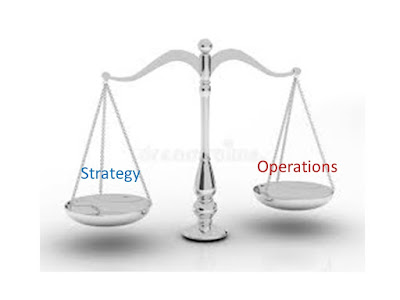
There is a constant balancing act between strategy and operations, and it gets even more challenging during periods of change or near impossible during significant chaotic events. COVID has brought this issue front and center with the increased speed of decisions and intelligent actions on several fronts. We aren’t through this threat scenario yet, but we can expect more threat and opportunity situations to emerge globally and locally. It puts a premium on superior insights, optimal decisions, and an excellent management overview. It means that the links between strategy and operations need to be optimal while allowing for emergent change. The days of the steady course are numbered at worst and only temporal at best. It means that an "Insight First" approach based on "Contextual Insights" to stakeholders is needed.


What Are the Links Between Operations Strategy and Business Strategy?

The business strategy is the overall business vision looking further ahead and anticipating the direction and business wants over a long period. The operations strategy is to provide a plan for the operational functions to make the best use of an organization's resources. Therefore, operations strategy must be aligned with its business strategy to enable the company to achieve its long-term plan. In addition, it means that its operations must be agile enough to support strategy changes while feeding monitoring information that might indicate trends that imply a change to the current strategy.

Example Checklist for Methods Linking Strategy to Operations

The recipe for linking strategy to operations has some essential ingredients that much be put together to support optimal results in several changing contexts. First, it means that connecting “what to how” is critical to be kept optimal and ready for change. Ideally, each company should have an integrated method and supporting toolset. The methodology must link the what and the how in a well-woven way across organizational stovepipes and business boundaries.

WHAT FACTORS:

Vision and Mission

Strategy / Scenarios

Critical Success Factors

Risks / Patterns / Events


HOW FACTORS:

Policy / Rules / Boundaries

Objectives / Goals

Projects / Initiatives / Milestones

Processes / Orchestrations

Organization / Partners


Example Checklist of Functionality in Tools Linking Strategy to Operations

Supporting a comprehensive methodology that links strategy and operations that delivers results should be a tool suite, generally a digital business platform that focuses on results, change opportunity, and change management. This platform/tools suite should link/integrate many functions and features that deliver business outcomes. This highly integrated platform has to work seamlessly with the method across functional silos and help focus participants on results. A management cockpit often visualizes the results that build a base for automated management functionality built on top of this integrated platform.

Strategy Planning Features

Strategy Performance Reporting

Balanced Scorecards

Operational Performance

Contextual Analytics

BI Dashboards / Fast boards

Collaboration Features Organized by Results

Real-Time Chat That is Visible to All

Audit Trails by Data Point

Action Plans Linked to Stakeholders

Integrated Risk Management

Integrated Process Management

Integrated Low Code Features

Integrated Process Mining


Net; Net:


There is a delicate balance between operations and strategy. At the same time, the obvious and traditional approach is to lay a plan and implement it optionally at the operational level. It works well in periods of stability, and the active monitoring points to more optimization. However, in a more emergent world with change, operations can point out emergent signals and patterns that may suggest a need for change. A solid methodology linked with an integrated platform will allow for both proactive and reactive strategy changes and monitor the effect of major and minor changes. Organizations should be pursuing this balance with the help of an integrated method supported by a corporate performance digital platform that embraces the management cockpit.

 
Please Help with A Survey On Management Cockpits by Clicking Here You will receive a summary of the results if you leave an email address in February. Please be patient with the initial screen and use your down arrow on the drop-down selections.

Additional Reading:

Frictionless Management

Real-Time Fast Boards

Management Cockpits

Real-Time Strategy

Management by Wire

AutoPilot Management


Wednesday, November 10, 2021

Attaining Autopilot Management

There are areas where automation is scary but necessary. It is true of management and driving vehicles. Both are on the way to more automation. We are seeing a revolution in driverless cars that is taking the driving tasks from the drivers and slowly passing them on to forms of automation combined with AI that learns effectively in real-time. This automation journey is bearing fruit now with driver-less taxis and driver-less freight hauling. The maturity of automated freight movement is taking off rapidly right now. Automation may just assist us in the nick of time with messed-up supply chains and driver shortages. There is an emerging parallel for managing organizations that is early and also taking off. There is a maturity to this autopilot management journey that I will try to convey here. Much of this revolves around making better decisions and taking appropriate actions speedily. This post will investigate the progress towards "Autopilot Management" and when we might see it. This post is building off some earlier posts on management by wire and the management cockpit.


What is Autopilot Management?

Autopilot management automates the management processes that observe, decide, act and watch for the expected or unexpected outcomes. It will not happen overnight and will evolve from simple automation to highly informed and interactive automatons. The quest for 100% automation might be a pipe dream. Still, great leaps of progress can be expected over the next few decades making business agility a powerful ally in the competition game. It is now possible because of the leaps in digital technologies, including AI that learns and postulates alternative courses at the strategic level, alternative rules at the tactical level, and focused actions at the operational level. The definition will have levels of maturity that I have described below.

Level 1 Notify:

Notification is the lowest level of automation. Events, patterns, and actions are aggregated and visualized, focused on known decision points. The management cockpit plays a key role here for integrated visualization. Automation will notify the manager(s) of abnormal or out-of-bounds conditions or situations. It is purely advisory and will grow to identify emergent events and patterns to sense potential emergent conditions related to threats and opportunities.

Level 2 Suggest:

Moving up the autopilot maturity curve, the management cockpit will provide/suggest alternative decisions and actions. In some cases, the management cockpit will suggest further analysis and collaboration to deal with expected or unexpected situations. It may be as simple as continuous improvement suggestions at the operational level or an adjustment of rules and boundaries for customer experiences or processes at the tactical level. However, it could draw attention to a potential shift in strategic direction or identify new opportunities and threats.

Level 3 Decide & Advise:

Kicking the intelligence factor up a notch to decide and offer alternative actions for automated action before action is taken. The best decision that automation is capable of is taken, but the manager still determines the proper course of action. In this case, the manager would still have the finals say to the measures necessary in the situation detected or emerging.

Level 4 Decide, Act & Offer Overrides:

Here the level of freedom the automation is given has increased. It decides, but it will take action if an override is not selected within a reasonable time frame. A manager had better have a solid reason not to take the intelligence's advice in the automation tested and established. It might really be necessary for an emergent condition that might need further analysis, particularly at the strategic level.

Level 5 Full Autopilot Management:

It is where the automation would not require a manager's attention to the dynamic management conditions. Instead, the automation would be free to do anything an experienced manager could do within boundaries and constraints preestablished. Finally, it is where the law, ethics, and corporate charter play a significant role.

Net; Net:

Since flexibility and responsiveness now rule the marketplace for today's successful organizations, autopilot management has and will continue to become an increasing focus for organizations. Remember that any organization might only apply total autopilot to selected problem domains and give less freedom to other problem domains. The amount of change and emergence we have seen and will continue to see is going to accelerate. Just look at the impact on our interconnected world that COVID has had so far. While we are early in the automation of management, we can expect much more as managers become more comfortable with the automation of their internal tasks for managing their domain. Also, managers will look to automate interactions with external environments and the traditional other internal domains.

Please Help with A Survey On Management Cockpits by Clicking Here You will receive a summary of the results if you leave an email address in February. Please be patient with the initial screen and use your down arrow on the drop-down selections.

Additional Reading:

Frictionless Management

Real-Time Fast Boards

Management Cockpits

Real-Time Strategy

Management by Wire


Tuesday, June 22, 2021

What Have People Read in the First Half of 2021

 Thanks to all who have read my posts and especially for the feedback. As momentum swings up in this shift from the lockdown mentality to near full speed, the topics are shifting ever so slightly. There is still a big emphasis on hybrid work and results-driven collaboration, but the demand for top talent is forcing a shift in management attitude as I tried to capture in corporate culture and leadership style posts. The top topics in the last year are Customer Experience/Journeys, Management Improvement, Trends in Digitial, Digital Business Platforms (DBP), Better Ongoing Data Management/Data Mesh, and Real-Time Business Response. See Figure 1 for the last 12 months running. 

The first half of 2021 has all of the trending topics included, but a couple of new topics have popped up. Most organizations want to be more aware, so the interest in Management Cockpits and Real-Time Fast Boards is increasing. Also, organizations are concerned about the direction and progress towards digital transformation. In other words, "Is my digital progress on point?" "Are Management Disciplines Keeping Up with Better Learning?" See Figure 3 for the first half of 2021. Figure 2 identifies the most active countries for the first half of 2021 outside of the US which dominates the number of hits to date (not shown).  Let me know of any topics you would like me to address and I will try unless they are way out of bounds for me. 

                                Figure 1 Top Hits for the Last 12 months 


                                Figure 2 Non-US Hits 


                                Figure 3 Top Hits for the First Half 2021 

Tuesday, June 8, 2021

The Need for Real-Time Fast Boards


It is becoming painfully apparent that traditional dashboards are too slow and static to compete in our changing world. While COVID-19 has driven the point home, there are more changes to come that will be demanding faster and more innovative solutions for competitive decisions. Traditional dashboards fail to deliver on the data-driven culture as data speeds up and sits in the cloud for new AI and advanced analytic assisted decisioning. According to the Harvard Business Review in 2020, 84% of frontline workers report a poor experience with today's analytical solutions, and 67% of executives are not comfortable using data from their existing data resources. It implies that the problem with decisioning is that there is more than keeping up with known or emergent KPIs.


The Need for Speed

Traditional dashboards do not deliver modern world speed because they are fragile and use old data. Most decision-makers are dealing with data that is 4-5 business days old at best. If a decision-maker wants a new insight or tries another decision-making approach, it takes too long to change the existing dashboard. The data is slow; the dashboard changes are time-consuming and expensive. It is no wonder only a small group of executives believe their existing analytic solutions are mature enough to keep up with the organization. Faster decision data in the cloud is one step in the right direction.

The Need for Complete Context

It is so easy to focus on fragments of a decision and sub-optimize. Often getting data about critical neighboring contexts and downstream impacts of decisions are overlooked, or the time-pressure causes this step to be skipped. Often siloed analysis contributes to a fragmented insight situation. It can be caused by organizational boundaries, various tools, and incomplete data sources. Therefore organizations are moving from a patchwork of disconnected dashboards to management cockpits.

The Need for Collaboration

A wise decision-maker will often check with other fine minds and experience bases to attain decision excellence. Collaboration alone can help knock down some of the organizational walls and resist a significant decision, and take appropriate actions with speed. It is beneficial in verifying the data and the potential downstream outcomes of a decision and the resulting actions/impacts. Often the collaboration tools are devoid of decision contexts and are a separate disconnected toolset.

The Need for More Smarts

Even these fast boards need assistance with detecting necessary signals, events, and patterns. It is mainly an issue for emergent situations where the signals, tolerances, and patterns were not anticipated. Since there is no way for the human eye to catch these speedy emergent patterns, there is a crying need for AI and Analytics with insights to detect these patterns in real-time minimally and predict the emergent trends ideally.  These same smarts will help us personalize the analytic outcomes and new fast bords that play in a management cockpit.

The Need for Dynamic Experimentation

Once detected, the decision-maker can orient his/her options with the help of collaborators. Some of these collaborators should be AI and advanced analytical models that can project the impact of a decision and resulting changes. The ability to experiment with a range of analytics producing various outcomes is a must in a world of increasing speed. It may imply re-using models and analytics that have proven helpful in the past. All of these contribute to an immediate use-case development environment.  In today’s market only a few players seem to understand what decision-makers want including SAS, Tibco, ThoughtSpot, and Wizly

Net; Net:

The tension between dynamic data and static siloed dashboards has to be resolved in a world of change. We are no longer in a steady-state, and I expect more issues to respond to with fast boards applied most intelligently. If we can’t do that, we will never scratch the surface of all the big and complicated data we are capturing today and storing for tomorrow. It’s time to modernize decision-making to help optimize operational outcomes while sharpening organizational tactics within emerging opportunities and threats that may deliver new strategies.


Monday, March 22, 2021

Stakeholder Collaboration Equals Business Success

It makes no difference if an organization is attempting new opportunities or dealing with emerging threats, stakeholder collaboration, with significant visibility, will deliver improved competitive positions and more sustainable businesses. Even if the change efforts are more focused on continuous process improvement, better customer experiences, or incremental digital transformation, the importance of stakeholder collaboration is significant.  Stakeholders can be at the executive level or just innovative business managers in search of significant results as long as they don't sub-optimize on small organizational units to the detraction of others. Stakeholder collaboration provides great insurance for overall results. What are the typical stakeholders for integrated and large impact change in organizational customer journeys and processes?  Let's explore the following collaborating roles for business outcomes. 

Core Stakeholders

Stakeholders are the key drivers for management and change that measure true business outcomes throughout the defined scope of efforts to innovate or improve. They typically are innovative and hard-driving groups or individuals that want to improve outcomes. For large scoped high impact efforts typically customers, social communities, partners. investors and vendors are engaged and involved. For more localized efforts, most of the stakeholders are internal but looking for cross-organizational outcomes. Stakeholders often charge optimization agents in seasons of low change to deliver better incremental results and change agents for sure in seasons of high change. 

Optimization Agents 

Journey and process managers are key collaborators for the core stakeholders and help manage the process operators to ever-improving results over time. This is what I call "Small Change" that constantly optimizes existing journeys or processes to make them better overall. Typically the changes are around tuning and optimizing the goals, guardrails, and performance indicators in existing processes and can be done without large and cascading impacts. Core stakeholders allow a greater level of freedom for these kinds of improvements, but visibility to the improvements is essential.

Change Agent:

"Big Change" is usually lead by change agents that seek bigger scopes and larger impacts, so the intensity and frequency of collaboration rise with the stakes. There is usually a significant communication plan to let all the participants know the progress even if the large change is bitten off piece by piece in an agile change and development environment. The change agent will be constantly collaborating with the Core Stakeholders as the risk-reward equation demands it. In fact "Fail Fast" proto-types, simulation efforts, and model work environments might have to be established to prove viability. The change agent plays a key role by working with optimization agents that represent present practices and the core stakeholders that want significant change or even a whole new model of work. 

What are the key best practices to enable and even enhance these key collaborations? Let's explore three that I have seen work in multiple organizations. 

Incented Collaboration is a Best Practice

Getting the change core stakeholders wants in the best possible way requires a change in the reward system. Individuals should be incented to take reasonable risks so the fail-fast approach gets some momentum. Most people dislike change so the chance for runaway fail-fast efforts is unlikely. It is also important to report the learnings of failed efforts, so no punishment for failures is also a key incentive. 

Holistic Visibility is a Best Practice

It is important to have visibility into results, collaborations, and learnings in near real-time so that key collaborators and core stakeholders are aware of the state of progress, so they have a chance to inquire and potentially provide a forward block for the change experimenters and implementers. This visibility is likely to kick off more collaborations that are in the public eye, so good ideas will bubble to the top. 

Capturing Innovation Ideas is Best Practice  

Often good ideas are tossed onto the refuse heap because they don't immediately assist the efforts in progress. Innovative organizations will likely want to see, hear and store innovation ideas for the future and further core stakeholder collaborations. Instead of a distraction, these ideas are a coveted source of future gems of progress. Some will make the grade and some will not, but losing them in the hustle to completion is not acceptable.

Net; Net:

The modern and sustainable business must employ collaboration. The savviest of the organizations will collect, inspect and evaluate these collaborations for contributions to desired outcomes. These organizations will employ the very best methods and tools to focus these collaborations into progress now or in the future. An example of a collaboration platform that not only gets this approach but promotes it is Parallel. Check out Working in parallel


Monday, August 3, 2020

Increasing Corporate Performance with the Database of Now

Organizations no longer have the luxury of sitting back and waiting for an opportunity to react. Corporate performance depends on intercepting the emerging future quickly, thus putting a premium on the Database of Now. We can see many examples of the inability to pre-build strategic responses to emerging conditions such as inverted yield curves, new super competitors, hyper disinflation, currency shifts, pandemics, ECO events, and geopolitical shifts. So how do organizations take advantage of the database of now and build for interacting response cycles? The answer is to create a database of now and leverage it differently at different levels in the organization (See Figure 1) while trying to extend reaction to preemption. The interaction will be changed at different levels and cascading levels of strategy, tactics, and operations.


Figure 1 Interacting Response Cycles

Organizations are running in an automatic mode within normal conditions; they take actions without a lot of thinking or bother. The problem today is that automatic mode is not happening consistently with profitability like it has in the past because of emergent conditions. These conditions can emerge from a variety of sources represented by fast and large growing sources of data. These conditions can come from outside the organization in either an anticipated or unanticipated manner where they are not as controllable. These conditions can come from inside the organization to optimize business outcomes through observation or management influence in a controlled fashion. See figure 2 for the common sources of new conditions. The causes include changes in data, patterns, contexts, decision parameters, results from actions, changes in goals, or new risk management desires/demands. These changes are occurring on a more frequent basis and at a faster speed, thus creating the need for the Database of Now


Figure 2. Sources of Emergent Conditions

Keep in mind that each level's triggers in Figure 1 will likely be different, iterative, and possibly influenced/interconnected by other levels.

Operations of Now:

Operations are focused on completing business events, customer journeys, and work journeys with the support of humans, software, bots, and physical infrastructure. The operations are often iterative and monitored in a near real-time fashion. Today's operations require a Database of Now where the dashboards reflect actual progress/completion of work. When exceptions emerge, responses are required within the constraints of existing operational goals to make minor adjustments. Also, significant adjustments need projects that may leverage a fail-fast approach to make corrections. Operational goals are often influenced by changes initiated by tactical and strategic decisions and adjustments. Analysis and reporting help make appropriate adjustments without unseating other operations.

Tactics of Now:

Tactical management within the constraints of strategy tends to optimize interrelated outcomes that may look across multiple operational domains. Real-time forecasting based on real-time data is essential to predict the direction of aggregated operations. The Database of Now plays a crucial role in making better decisions by quickly changing rules to optimize business outcomes in support of strategic goals and directions. Tactical changes may imply shifting resources, changing rules, goals, and constraints of aggregated operations. Often key projects identified at this level, like recognizing patterns that might indicate the need for a new product or service. This is also the level that decides the amount and type of automation that will help reach the currently selected strategy.

The Strategy of Now:

Strategies tend to stay stable and are highly linked to the organization's missional operations within Its typical communities and common scenarios. Predictive and prescriptive analytics help shape expected scenarios that may be sitting on the shelf with their associated tactics and operations ready to jump in at a moment's notice. Of course, the Database of Now can point to a playbook for switching scenarios when expected patterns emerge. Still, unexpected patterns can generate the need to apply new scenarios generated by more predictive and prescriptive analytics. 

Net; Net:

It is pretty easy to see that fast monster data will create the need for the Database of Now necessary for better performance at all levels (strategy, tactics, and operations). It is also clear that fast data without time lags generated by too many synchronizations and transformations is necessary for better corporate performance while keeping all contributing resources aimed at business outcomes. 


Thursday, May 14, 2020

Dealing with Emergent Data


The recent and ongoing battle with COVID-19 has raised a goodly number of issues in and around getting surprised, arguments around emergent data, and slow/appropriate responses. The lessons learned so far are pretty rich, but I think there is more to discover. Scenario planning seemed to be lacking, the early warning systems seemed to have broken down, responses seemed slow and unpracticed once the denial hurdle was overcome. This was not a "Black Swan" event, so why did this pandemic seem to throw a monkey wrench into humankind's systems and processes? It may a bit early as all the dust hasn’t settled yet, but there are some obvious conclusions even now. What can we say now?


Scenario Planning


While pandemics are a practiced and expected scenario, the level of detail in this kind of scenario was tested in new ways. There were new discoveries in how trends in supply chains were working against us. With longer supply chains for medical supplies and equipment, the stress put on existing supply chains because of panic buying of many items, including food, and how do deal with rescinding demand in finely tuned supply chains. The detailed scenario planning and modeling really seemed off the mark this time on a worldwide basis. There were also some emergent geopolitical effects not completely thought through for sure. Scenario planning needs to handle models with more emergence in a fine-tuned fashion. Businesses and individuals need to up their game in this arena as well.

Early Warning

It is not surprising that less than effective scenario planning would lead to missing emergent data that was not expected, but as the emergent data morphed/changed, there were shadow events, signals, and patterns that took longer to recognize. Early warning needs to be able to recognize event patterns that go beyond expected events. These events and patterns need to participate in more complexity theory and real-time recognition that understands emergence in complex and interconnected systems and supply/value chains. This starts out at endpoint detection and merges with associated and real-time unassociated events to create emergent patterns. Agents/bots sniffing at the edge and event responding in the case of known situations and contexts is minimal, but merging and emergent complexities need to be tested, and models/scenarios need to be updated in near real-time.

Appropriate Responses

It seemed pretty clear that many responses were unpracticed, emergency stores were over-whelmed and tactical responses were being invented on the fly. Since appropriate responses are dependent on in scenarios and early warning, the compounding effect on responses were evident. There were some pretty impressive examples of human creativity/inventiveness and sacrifice to make up for the deficiencies, but can we plan on this always happening for the good of all? We saw governments taking over supply chains, people quarantined late and long, and decisions walking the razor edge between mortality and economic suffocation.
  
Net; Net:

We can do better.  We have to do better as more negative scenarios are emerging as nature deals out an accelerating frequency of earthquakes, hurricanes, volcanoes, pandemics, regional famines, and shifting geopolitical events. I suggest we invest in Emergent Data Recognition (EDR) tied to improvements in scenario planning and practiced responses from a strategic and tactical perspective. There are lessons in emergent data that we have to be ready to leverage. The more prepared we are, the better it will be for us all. It's worth the investment in terms of life and livelihood.

Monday, May 11, 2020

Scenario Planning Is Essential to Survive & Thrive

I have heard many say that it takes bravery to complete a strategic plan and I would agree. I would also say that NOT having a strategic plan that stands up to many practiced scenarios is dangerous. We can see that in the case of COVID-19 in 2020 shows the importance of scenario planning. It's not just the fact that scenarios may have been planned for, they certainly seemed dusty and rusty.  I'm sure there has been some innovative thinking applied to our in-flight adaptation, but the rollout has had more than a few bumps in terms of recognition, speed, and coordination. The results have life-changing for all of us and sadly life-ending for too many.


Scenario Planning Must Stitch Together Strategy, Tactics and Operations

Scenario thinking and analysis generally uses simulation/gaming for policymakers to combine know facts with potential emerging situations in single or complex arenas of economic, geopolitical, demographic, military, resources, and industrial capabilities. This includes tapping models with data and combining them in a predictive fashion until a particular scenario seems to be imminent or happening with anticipated opportunities or threats. These can be detected by leveraging emergent data recognition by looking for signals, events, or patterns. For scenarios that are moving from possible to probable to active, links to emergent and real-time analysis and data sources. This will allow for adjustments to tactics and operations that flex to the best shape possible for the active scenario(s) with optimum operational actions.

Scenario Planning Must Consider Multiple and Ever-Changing Contexts

Often scenario planning can be blinded by a single laser-focused approach on a single probable scenario that leads to the desired future. There need to be exercises that leverage lateral thinking and hybrid sets of complex scenario combinations. The scenario planning effort is not a "one and done" effort, but needs to factor in emergence in the worst case and subtle changes in the typical case. There can be a quick shift from just a scenario to a real possible future and in rare instances probable scenarios. Best practices would expect organizations to identify all likely scenarios and even a few "black swan" scenarios.

Scenarios Must be Practiced to be Effective

Likely scenarios (all of the probable and some of the possible) should be practiced at a reasonable frequency. The practice should include surprise changes to test organizational skills, processes, and system agility/responsiveness. Even though these are necessary drills, all participants must be communicated to as if the situations are real. Many hospitals have evacuation plans that they practice
on a regular basis pretending there is a real event like a hurricane, chemical spill, or flood.

Net; Net:

There is a good lesson for organizations in watching the COVID-19 situation emerge. Organizations can no longer afford not to have up to date scenarios with practiced actions on the shelf that include both the tactics and operations. A communication program for practiced or active emergent scenarios is a must.

Tuesday, April 7, 2020

AI at the Edge: Creating Coordinated Autonomy


Today organizations have to deal with so many emergent behaviors that the notion of central control as the only coping mechanism seems to be receding as a dominant management model.  Freedom must be doled out further from the centrist idea by creating goals, constraints, boundaries, and allowable edge behaviors. Someday, software and hardware agents will negotiate their contribution to business outcomes on their own, but until then, organizations will have to prepare themselves by managing coordinated autonomy.


Learning About "The potential" at the Edge

Edge computing is a form of distributed computing that brings computation and data storage closer to the location where it is needed, to improve response times and provide better actions. Now, AI on Edge can offer a whole lot of new possibilities. In Edge AI, the AI and other algorithms are processed locally on a hardware device or a distributed software agent. It uses data that is generated from the device/agent and processes it to give real-time insights in less than a few milliseconds and allows for pattern recognition, fast decisions, and better actions to deal with emergent conditions. We have seen practical applications in smart buildings, smart cities, and intelligent industry 4.0 supply chains. While most of the visible examples are in and around physical infrastructure, AI at the edge is starting to work at the customer, partner, and employee edge interfaces as well. This is leading to more utilization of software bots, assistants, and agents.

Trusting AI & Algorithms to Increase Freedom Levels

Today machines and software are programmed with rules that are preplanned and inflexible for changing conditions. Somebody needs to program those rules, decisions, and actions ahead of time. Low code or no code shortens the time to change for emergent conditions. Another great approach is to learn for the emergence and adapt the rules, decisions, and actions inflight. This requires a different trust level than in the past, particularly with unsupervised learning. By giving hardware and software goals and constraints, these freedom levels can broaden to deal with faster emergence. Organizations will have to learn new freedom and trust levels to take advantage of the speeds necessary to compete.

Enabling Digital Twins for Manage Adaptability

Every physical device and software agent will have a digital form of an interactive model that represents its logical self (twin). These models can be watched in interaction with other digital twins to observe, manage, and change their behavior. Mining the behavior of the digital twin will create an observable behavior that can be overlaid on timelines or other forms of observation. The digital twin is a practical way to understand if a hardware or software agent is behaving well or badly so that managers can take appropriate actions.

Net; Net:

Organizations will have to deal with emergent behavior whose footprints will likely be in big, fast, and dark data, events, or content. This will require new competencies, skills, and coordinated sets of digital technologies. Organizations that embrace and take advantage of emergence will likely leverage AI at the edge and manage it well for their competitive differentiation.