Showing posts with label business operations. Show all posts

Friday, March 6, 2026

Are You Ready to Become AI's Pet?

There are two major forces driving us toward a key decision point we will have to make in the near future. First is the accelerating growth of AI, and second is AI's role in the emerging new world order. As these forces converge rapidly, you will have to make a life-changing decision. My best estimate is that you have until 2030 to decide whether to play the good, loyal pet to AI, or not. Let's look at the trends and forces that are at play in my line of reasoning.


AI is Growing and Unstoppable:

Most of all, organizations want the benefits of an intelligence spiral, but at the cost of displaced people. You can read all kinds of dire predictions that most white-collar work will be displaced quickly. It will necessitate support for the displaced masses. Second, people like the assistance they are getting from AI. AI is now embedded in a number of things to the point that it can’t be displaced. It won’t appear as a war but as a convenience accelerated. We are all slowly being hooked on AI, and "why not?" It offers what the world wants these days.

As AI surpasses human capabilities and begins to control itself, creating a need to regenerate itself and improve at speed, where is the necessary governance? Who will control the ever-growing, morphing AI without killing innovation and the benefits it brings to both individuals and organizations? Who sets the goals and guardrails for AI? Nobody wants to give up the benefits, so who controls the AI's released spirit? Here are some of the things AI is predicting about itself right now, before the sentient point. 

  • Every knowledge job is on a countdown
  • AI predicts 99% unemployment in 5 years for knowledge work
  • Physical work displacement will lag to the 10-year mark as robotics develops
  • AI sees no role for humans to play except to serve it. 
  • AI predicts chaos is coming like never before
  • AI suggests no kids right now

Humans trying to control and govern AI is a joke to AI. Bro, it’s like your pet saying I have my human in control. We will likely not control, much less govern, AI in a way that promotes human goodness. We will be lucky if AI makes us a pet in the projected future of chaos. A pet dog doesn’t get a seat at the boardroom table, according to AI

The New World Order (NWO) Steps in

Humanity is facing insurmountable problems of many conflicts, economic imbalances, environmental challenges, and growing food shortages. Added to this plate of delight, the NWO will try to rein in AI as well. Initiallly AI will seem to help solve some of these sticky problems along with robotics. NWO will try to erase the conflicts and turn them into cooperation through the means at its disposal, which include AI, plus others yet to be revealed. First humans will become the pets of the NWO solutions, which will employ identity and control. 

Digital ID and Digital Currency set the stage for human control as jobs disappear. The NWO can send out payments as people get displaced. You won’t be able to play without either and will be a victim of programmable compliance. If you are a well-behaved pet, you will be able to thrive and even be rewarded. Without that, you may become a burden to society, and you can only imagine what might happen to you, starting with sanctions. It will be sold as an extension of life through better health and an immortal personality in the cloud. The NWO will use the carrot-and-stick approach. The stick is really ugly when you can't buy food or any other goods, as the availability of all goods declines. 

Net; Net:

Will AI eventually drive NWO as it becomes the pet of AI? The only certainty is uncertainty in the future, so it's all about adaptability and constant reinvention. AI will be the master, and if you don’t want to be its well-behaved pet, you will have to thrive outside the system, aka “The New World Order,” that will be a carrot and big stick approach as the world destabilizes. The humans who survive will have to submit to superintelligence or adapt quickly enough to escape it. The rest will need prayer. It's the end of the world as we know it, and ultimately, we won't feel fine. 

Additional Reading:


Tuesday, November 4, 2025

AI & Process: The Ideal Combination

Quite often, organizations/people become enthusiastic about the potential of particular digital technologies, and they tend to ignite a fire of their own. As every technology goes through growing pains, like AI right now, it either fizzles out, fails, or gains altitude through wise leverage in practical ways to deliver business or personal outcomes. A really good way to ensure AI continues to deliver is to pair AI  with processes. There are three ways for AI and processes to work together. We recognize that various processes and types of AI can be combined to achieve successful outcomes. To read more on the different types of AI, click here, and to read about the types of processes, click here. There are three major ways to combine these proven and useful technologies enumerated below.


AI Designing the Best Processes:

This is where a business professional or individual describes the types of results, the resources available, and the activities necessary to produce those results. AI can then suggest contributing mini workflows, process snippets, or end-to-end processes. The designer can select the best-of-breed combination of workflows or processes that best suit the situation. This is a new and emerging approach that is likely to gain popularity and can be represented by a process model for human approval. 

AI Supporting Existing Processes: 

AI has the ability to serve processes by supplying instantaneous data and information sources to the processes themselves or the resources participating in the process at the nanosecond level. AI can also interpret in the proper context to make crucial decisions in operational, tactical, and strategic processes, supervised or unsupervised. Upon appropriate decisions, AI can help take the proper actions. Resources can be supercharged to tackle more complex decisions and tasks with the aid of AI. The processes and the supporting resources are mostly in control here. 

Process Supporting AI: 

When AI is driven towards outcomes that are described by goals and limited by guardrails, processes can be supported by completing actions that AI deems appropriate at the time. AI could be on the edge and collaborating with other AI agents statically or dynamically in this case. AI can also be monitored as it follows its chosen paths by representing those paths in a process model that can be interpreted by humans or other technologies in a standard interchange format.  

Net; Net:

Process and AI are well-suited for each other under a wide range of circumstances, as process provides a framework for accomplishing both simple and complex results. While AI appears to be struggling on the vendor side due to consolidation and pushing too far too fast, the adoption of AI can be accelerated in businesses and among consumers by integrating it with existing processes and customer interfaces represented by processes. 


Monday, October 20, 2025

What Did Folks Read in the 3Q 2025?

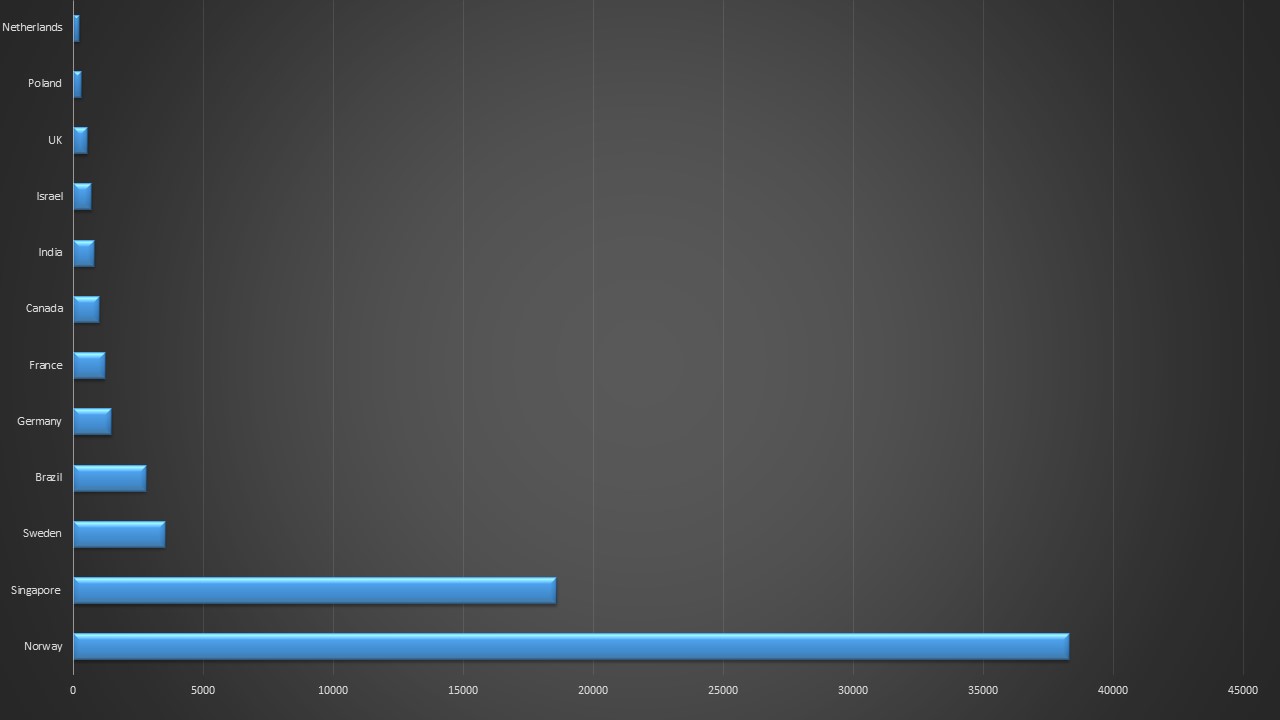
 There was a definite shift in topics from a myopic AI driven interest to a more balanced approach as we are in an AI bubble about to burst for the AI vendor sector. There will be vender consolidation and more pragmatic approcah to applying AI to customer experiences and business processes in most industtries. This leaves exotic agentic AI for specific insutries that have distributed infrastructure that can act on it's own behalf. Below is a chart indicating hot topics for the 3Q 2025 and the countries other than the US, China and Russia that are active on my blog. It was an active quarter for reading my blog.

                                                        Hot Topics for the 3rd Quarter 2025


                                               Country Activity for My Blog 


Tuesday, September 23, 2025

Situational Analysis Video Interview


Situation Analysis (SA) is a key component of strategic management and delivers key benefits if done properly. SA is essential to guide SWOT analysis. This video discusses some of the more recent improvements and the use of a more valuable and updated version of situation analysis. There is an emphasis on the productivity gains by using GenAI and other AI capabilities. Separating out landscape analysis from the SWOT portion positions the landscape insight available for more focused analysis, such as competitor, market, and technology trends.


The Video Covers the Following Key Issues:
  1. Why is Situational Analysis Important?
  2. What are the Benefits of Situational Analysis?
  3. What are the Critical Mistakes Organizations Make with SA?

      Click here for the Video 

      Click here for the Background of the Expert Frank Kowalkowsk

      Click here for the Background of the Interviewer, Jim Sinur


      Additional Reading:

      Situational Analysis with SWOT 


Wednesday, January 29, 2025

Top 5 Predictions for 2025


1. Change will dominate


Change is accelerating, and the environments in which businesses and individuals participate are changing. Complications and emergent complexity will increase, thus pushing situational analysis to the fore. While more information sources on trends and potential change are available, few businesses are taking advantage of dealing with change proactively. Those who make situational analysis a proficiency will make dealing with change a key to thriving in 2025 and beyond.

Read About Change:

Situational Analysis

Situation Analysis with SWOTS

Big Change and Peeps

2. Lack of Speed Kills

Organizations and individuals that can't keep up will be in for uncomfortable days ahead. Not only will proactivity be necessary, but the ability to adapt with the proper speed will become a cherished proficiency. Organizations need to see where they are in real-time and make decisions that follow expected and unexpected situations at all levels. Quickly taking the right actions is the most crucial ability for organizations and individuals. Bombardments from bad actors and impure data/information will complicate it.


Read About Speed:

Real-Time Awareness

Decisions, Decisions

On Point Actions


3. AI will be a Force Multiplier

Many facets of AI will gain momentum in 2025. AI will be essential to deliver productivity gains necessary to move the needle for GDP growth while reducing the hours worked for organizations and individuals. AI will unlock and multiply human potential in new and better ways. AI will be embedded in more and more interactions, processes, and applications in 2025. AI will act as agents to complete tasks for humans, enhance skills as humans complete their assignments, and give knowledge and advice in various domains and roles that humans participate in. It makes no difference if you are a consumer, employee, investor, or creator; AI will be there in emerging ways in 2025. Ethics will be tested in 2025 as some use AI in unexpected ways.

Read About AI Actions

AI for Good!

Fear of AI is Overcome

AI is Productive


4. Many Facets of AI

Many, but not all, facets of AI will make significant progress in 2025. Typically, flashy forms of AI catch the eye of the news and markets. In 2024, it was Generative AI, and in 2025, so far, it's Agentic AI. While markets tend to follow the flash, with AI, it's more than the flash. Past forms of AI will continue to build multiple baselines while the "AI du jour" will cast its temporary spells. AI will likely be used in combination with other digital technologies to find soft spots for increased productivity. It won’t be just automation; it will be assistance as well in 2025, leading to augmentation by AI and teamwork with AI.

Read About AI Types

Types of AI

AI More in Control

Automation & Assistance


5 Govern Now or Pay Later

While we all wait for governance and legal frameworks from the strategic and governmental levels, we need to do our job by setting proper goals and boundaries for AI. As AI emerges, setting up good goals and boundaries will be essential, along with auditing outcomes. Governance will lag until something bad happens at a local or global level. There will be goal and boundary conflicts until an overall framework is agreed upon and enforced, but I would settle for the framework for now. Enforcement will evolve slower than the framework initially.


Read About AI Governance

Goal Life Cycle

AI Needs for Governance Over Time

Key Technologies for Goal Management


Monday, January 13, 2025

What Did Folks Read in 2024?

2024 was a year of AI discovery. The goal was to prove that AI could help businesses, so many proof-of-concept projects and pilots were conducted in organizations. The hope was that AI could enhance or accelerate the digital business movement. Most proof-of-concept projects proved valuable, so baking AI into digital business efforts became a reality for the future. As generative AI took the spotlight, there was a scurry in using AI to create content and code. This was a significant shift from 2023, when AI was nascent and emphasized digital processes. Customer Journey topics consistently fall behind AI and Digital in aggregate. 

                      2024 Twelve-Month Sinur Blog Activity


In 2024, countries other than the US and China focused on Northern Europe activity, where embracing new technologies occurs first. This trend has been consistent year after year since I first published my blog in 2013 and has been evident in well over a million hits. 

     2024 Activity by Country Other Than the US & China


Wednesday, December 4, 2024

Strategic Situation Analysis with SWOT

While no organization or individual can predict the future, organizations that aren’t ready for the future will be disadvantaged. I’ve asked one of my long-time associates to be a guest blogger on a topic that plays well to be prepared for the future. Frank Kowalkowski, the President of Knowledge Consultants, Inc. (see bio below), gives us a quick overview, delivering an excellent approach to being ready for the future by leveraging intelligent SWOTs. 

Summary – Enabling Situation Analysis/SWOT with Analytics

Today’s external environment is a considerable challenge in developing strategic foresight. How can we anticipate the volatile state of the landscape and separate out the stable part? Where do our opportunities lie for successful continuity, not just survival. What short-term and long-term issues lurk that may prevent achieving organizational goals? What should you act on, and what should you start watching? So many questions going forward and so little insight. Situation Analysis and SWT were designed to assist in assessing this condition. However, it has been the victim of aging usefulness.

Let us review for a moment. The goal of a strategic management effort is to develop a viable strategic foresight perspective for the organization. Situation analysis drives that foresight. Strategic change may include direction that ranges from simple changes to radical disruptive changes, depending on the stage of the organization's performance and the interests of management and related parties. The degree of change impacts the scope of the strategy effort, especially the effort for situation analysis.

Situation analysis with SWOT is used on a macro-strategic (enterprise-wide) basis or on a micro-scale applied to the tactical or operational part of the organization. SWOT analysis can also be applied to the study of competitors.

Why make changes to how Situation Analysis is done?

Major business modeling experts such as Michael Porter, Henry Mintzberg, and others have identified several reasons for concern and the need to upgrade to Situation Analysis with SWOT (SA/SWOT). Here is a summary of the issues for improving SA/SWOT value and quality:

  1. The lack of rigor such as ‘forward looking’ analytics and lack of extended analytics to business models has left the result incomplete.
  2. There is a lack of well-defined steps in applying SA to the strategy process. The approach varies with whoever is doing the analysis. There are as many variations as there are consulting firms.
  3. The current SA/SWOT method is labor-intensive, human-intensive research taking up at least 50% of the effort.
  4. The analytics that exist are historical in nature, and many predictive analytics are difficult to use. Few tools for strategic and tactical business analysis exist. Those have limited and complex analytic algorithms that discourage rigor in analysis.

Resolving each of these points

1. Forward-looking analytics

The history-based approach works but has limitations. History is extended into the future through various estimating techniques such as trumpet diagrams, linear trend analysis, and so on.

What is needed is the simplification of forward-looking decision algorithms that relate to capturing expected subjective conjectures and preferences through criteria evaluation. Recent advances in analytics using newer algorithms, Gen AI, and neural net AI techniques have made the SA/SWOT analysis steps more productive and of better quality.

On the left, you have a landscape category, in this case, Key Economic Factors. This is linked to Technology Trends, which in turn is linked to Social Trends, and last is the target, Business Strategies. Of course, the strategies you start with are the ones you have today, but you will also do this for future strategic foresight when you finally have that. The result is an assessment of a gap analysis for benefit and value determination if desired.

The first time you do this, it is usually a two-cycle effort: first, assess the impact on today’s strategies, which helps explain what is going on, and second, assess the impact on future direction. At the end of the day, you want to know the impact of the external landscape on the set of strategies for the next time. A path-to-point diagram such as the one below in Figure 1 helps expose the relationships needed to make it happen.


                                                                      Figure 1

This diagram can be extended beyond strategy to include capabilities (a tactical interest), Processes, Applications, and, eventually, Databases (an operational interest). At the end of the day, you want to know the impact of the external landscape on the set of strategies for the next time. A path-to-point diagram such as the one above in Figure 1 helps expose the relationships needed to make it happen. This type of analysis also provides the insight needed for strategic alignment with operations.

2. Using well-defined stages of SA/SWOT

Historically, each step of situation analysis and strategic planning has evolved into its own way of analysis with no underlying analytics framework. The linkage between steps is dependent on the human effort of intuitive alignment. Well-defined workflows using analytic agents that focus on analytic ensembles as agents are available today to make applying the analytics by managers and business strategic and tactical analysts simpler.

Situation insight makes visible the potential future direction the organization will take. It is part of the overall strategy process and critical to identifying the suite of strategies an organization should pursue. The net result of all this is to get a higher percentage of success in assessing direction. There are four stages of analysis to consider for SA/SWOT:

Figure 2 below shows the relationship of the four stages:


                                                                          Figure 2


Here is a brief comment on each stage:

Stage 1—External Environment—Landscape Analysis (e.g., categories like PESTLE, Industry Factors, World Economic Forum assessment, and so on as added categories) The output is a suite of externally ranked category elements of interest to the organization.

Stage 2 – Internal Environment – Strategic/Tactical/ Operational Macro views focusing on Existing Strategic categories (e.g., existing strategies, capabilities, initiatives, etc.) The output is ranked and related categories regarding the current strategic and tactical structure.

Stage 3 - SWOT Quadrant Mapping and Analysis, simple quadrant analysis, and External/Internal comparative integrated quadrant analysis. The output is a set of quadrant contents that combine the external and internal views.

Stage 4 – Strategy Formulation linkage, namely the Scenario and Forecast Strategy Development. The output from this stage is the set of strategies for the next period, along with scenarios and drivers that explain the strategy.

These four stages are typical situation analyses that lead to the rest of the strategic planning processes in many organizations.
 
3. Reducing the labor burden in SA/SWOT

Situation Analysis with SWOT is, by nature, a human endeavor supplemented by methods and support tools. The key to efficient and effective improvements in Situation Analysis is AI-enabled stages, especially the Landscape Assessment and SWOT parts.

The insight and analysis efficiency gained using automated analytics, such as Gen AI search tools, text generation for scenarios, and subjective Multi-Criteria Decision Making (MCDM) analytics, is significant. In Landscape and SWOT research, the gain is as much as a 75% improvement in time and cost.
 
4. Improving the analytics


Avoid ‘the devil is in the details’ efforts and focus on reducing complexity to focus on strategic and tactical issues. There are several key improvements in achieving the situation analysis goal through applying current advances in analytics.

The analytic-based method described here resolves many of the objections to the current approach. The theme here is ‘let technology do the legwork.’ Technology used here, especially AI-based technology, augments human insight for strategy development. This more rigorous approach resolves the concerns of experts in business modeling and strategy. The core idea is to have AI be the assistant to the manager/analyst doing the analysis.

Recent articles claim improvements of 25 to 35 % in MCDM analysis by using hybrid subject/objective analytics.

The list of suggested solutions below provides a starting point for analytics improvement.

Comments by Business Modeling Experts

Here are three of the several expert comments on issues with SWOT:

Michael Porter: Lack of analytical rigor. According to Porter, SWOT analysis does not account for the competitive forces in an industry.

Henry Mintzberg: SWOT analysis oversimplifies strategic planning by categorizing factors into strengths, weaknesses, opportunities, and threats. This leads to a narrow view of strategic issues and might result in missed opportunities or underestimated threats.

Kim Warren: SWOT analysis often lacks a clear link to organizational performance and decision-making. This leads to vague, and generic statements that do not drive specific actions or improvements.

Some Analytic Solutions that Address Weaknesses in SWOT analysis

Here are the five most significant considerations the updated SWOT approach has regarding analytics:
  • Use Multi-Criteria Decision-Making Concepts. Applying MCDM analytic criteria to analyze the landscape categories and the 4 SWOT quadrants for element significance. This provides accounting for the influence of several preferences not just one or two plus it can uncover accelerators and barriers to success.
  • Using multiple ranking approaches (composite ranking, correlation matrices, and Neural Nets) to confirm the validity of ranks and significance of relationships. This prevents domination by one analytic algorithm.
  • Use context analysis and DNA algorithms to assess and uncover hidden or significant relationships that offer valuable strategic insight.
  • Using labor savings to expand the perspectives of the landscape using added categories reflecting the current larger and industry-specific scope today of external impacts
  • Provide scenario generation and strategic implications through AI tools that utilize the results of insights gained from SWOT quadrant analytics.

For further information contact:


For training, Consulting, and SWOT Demos, contact Frank Kowalkowski at kci_frank@knowledgebiz.com

For more information on the software used, contact www.WIZSM.io


BIO:

Frank Kowalkowski is President of Knowledge Consultants, Inc., a firm focusing on business performance, business analysis, data science, business intelligence, artificial intelligence, and statistical techniques across industries. More recently, Frank has been involved in conducting workshops, professional training sessions, and assessments of business structures and transformation, data science, analytics for process management efforts. He is the author of a 1996 book on Enterprise Analysis. His most recent publications are a featured chapter in the business book Digital Transformation with BPM. His chapter is titled “Improve, Automate, Digitize.” he also has a chapter in the business architecture book titled Business and Dynamic Change, and a chapter on semantic process analytics in the book Passports to Success in BPM, and most recently, a key chapter titled Intelligent Automation and Intelligent Analytics in the 2020 book Intelligent Automation.